

The artificial intelligence chatbot market is exploding. With over 987 million people worldwide now using AI chatbots, finding the best AI chatbot apps has become essential for professionals, students, and business owners alike. Whether you’re looking to boost productivity, streamline customer service, or unlock creative possibilities, today’s best AI chatbot apps deliver impressive capabilities at various price points.
The global chatbot market reached $7.76 billion in 2024 and is projected to hit $27.29 billion by 2030—growing at a remarkable 23.3% annually. This explosive growth reflects a fundamental shift in how people work and solve problems. From ChatGPT’s 122.6 million daily active users to emerging competitors like DeepSeek and Perplexity AI, the landscape of conversational artificial intelligence has become more competitive and feature-rich than ever before.
This comprehensive guide examines the top AI chatbot apps available today, breaks down their key features, compares pricing models, and helps you select the perfect tool for your specific needs. Whether you prioritize cost-effectiveness, specialized capabilities, or seamless integration with existing tools, you’ll find actionable insights to make an informed decision.
What Are AI Chatbot Apps?
AI chatbot apps are conversational software applications powered by large language models (LLMs) that understand and respond to human input in natural language. These intelligent assistants go far beyond simple question-and-answer interactions. They excel at content creation, coding assistance, data analysis, image generation, research synthesis, and complex problem-solving.
The best AI chatbot apps leverage advanced machine learning to understand context, maintain conversation history, and deliver personalized responses that feel increasingly human-like. Unlike traditional chatbots programmed with rigid rules, modern AI chatbots learn from patterns in vast amounts of training data, enabling them to handle diverse queries with nuance and sophistication.
Key Capabilities of Top AI Chatbots
Modern AI chatbot apps typically include:
- Natural language understanding: Interpreting complex questions and context within conversations
- Content generation: Writing essays, code, emails, and creative content
- Information retrieval: Accessing real-time web data and summarizing research
- Image generation and analysis: Creating visuals and interpreting visual inputs
- Code interpretation: Running and explaining programming solutions
- File processing: Analyzing documents, spreadsheets, and data files
- Multimodal inputs: Processing text, images, audio, and video
The Best AI Chatbot Apps Compared
1. ChatGPT: The Versatile Leader
ChatGPT remains the undisputed market leader and best overall AI chatbot app. OpenAI’s flagship product dominates with 349.41 million monthly active users and accounts for 53% of all global AI app downloads. It’s the fastest-growing app in history, reaching 100 million users in just two months after launch.
Key Features:
- GPT-5 as the default model for all users
- DALL-E 3 image generation with creative control
- Advanced web browsing for real-time information
- Canvas workspace for interactive editing projects
- Advanced Voice Mode for natural conversations
- Code interpreter for running Python scripts
- Sora video generation (paid tiers)
- Deep Research for multi-source analysis
- ChatGPT Pulse for personalized daily updates
- Seamless integrations with email and productivity tools
Best For: Content creators, developers, researchers, professionals across all industries. ChatGPT excels at versatility—whether you need help brainstorming marketing campaigns, debugging code, or writing complex documents.
Pricing:
- Free tier: Limited GPT-4o access with slower responses
- ChatGPT Plus: $20/month with full GPT-5 access
- ChatGPT Pro: $200/month for advanced reasoning and more complex tasks
Pros: Exceptional reasoning abilities, widest range of built-in features, largest user community for support and plugin ecosystem, industry standard for AI capabilities.
Cons: Premium subscription required for full features, occasional factual inaccuracies on niche topics, can be expensive for heavy usage.
2. Google Gemini: Best for Google Ecosystem Integration
Google’s Gemini has become a serious competitor to ChatGPT, particularly for users deeply embedded in Google’s ecosystem. With seamless integration into Gmail, Google Docs, Google Maps, and Google Workspace, Gemini streamlines workflows for millions of professionals.
Key Features:
- Gemini Live: Real-time voice conversations (free on Android)
- Deep integration with Gmail, Google Docs, Maps, and Workspace
- Advanced web research and live information retrieval
- Veo 2/3 video generation (paid tiers)
- Imagen image generation and editing
- Audio Overviews for podcast-style summaries
- Native multimodal capabilities (text, images, audio, video)
- Long-context processing for handling large documents
- YouTube integration for analyzing video content
Best For: Google Workspace users, researchers, organizations using Google’s productivity suite. Gemini excels at providing up-to-date information and generating visually compelling content.
Pricing:
- Free tier: Basic Gemini access with limitations
- Gemini Advanced: $20/month with advanced reasoning, long-context, and access to latest models
- Enterprise plans: Custom pricing with admin controls
Pros: Superior image generation, best-in-class up-to-date information retrieval, excellent integration with Google services, free voice mode on Android, competitive pricing.
Cons: Inconsistent accuracy on some topics, fewer integrations outside Google’s ecosystem, less established reputation than ChatGPT.
Performance Insight: In head-to-head comparisons, Gemini leads in image generation quality and up-to-date information accuracy, making it the preferred choice for visual content creation and research-heavy tasks.
3. Claude: The Ethical AI Powerhouse
Anthropic’s Claude represents a different philosophy—prioritizing safety, truthfulness, and constitutional AI principles. With a maximum token context window of 200,000 tokens (compared to ChatGPT’s 128,000), Claude excels at processing massive documents and maintaining nuanced conversations.
Key Features:
- Constitutional AI for ethical, aligned responses
- Extended thinking capability for deep reasoning
- Artifacts feature for interactive code and document creation
- Exceptional long-form content generation
- Superior code completion and technical writing
- Document analysis with up to 20 files per upload
- Structured outputs in JSON format
- Memory features for personalized interactions
- API access for developers
Best For: Long-form content creation, complex reasoning tasks, developers requiring structured outputs, organizations prioritizing ethical AI. Claude stands out for academic writing, technical documentation, and creative projects requiring nuance.
Pricing:
- Free tier: Limited messages with Claude 3.5 Sonnet
- Claude Pro: $20/month for unlimited conversations
- Claude API: Pay-as-you-go pricing starting at competitive enterprise rates
Pros: Highest quality reasoning and analysis, exceptional ethical alignment, best for complex document processing, strong creative writing abilities, excellent for coding efficiency.
Cons: No real-time web search capability, slower response times than competitors, more cautious about controversial topics, smaller plugin ecosystem.
Competitive Advantage: Claude’s Opus 4.1 model achieved 72% on SWE-Bench, making it superior for complex software engineering tasks when paired with thoughtful prompting.
4. Microsoft Copilot: Seamless Productivity Integration
Microsoft Copilot integrates deeply with the Microsoft 365 ecosystem, offering unique advantages for professionals using Word, Excel, PowerPoint, Teams, and Outlook. As Microsoft’s strategic AI initiative, Copilot leverages OpenAI’s technology while providing native ecosystem integration.
Key Features:
- Deep Microsoft 365 integration (Word, Excel, PowerPoint, Teams)
- Designer: AI image creation directly in Office apps
- Conversation styles for personalized interactions
- Translation capabilities for 100+ languages
- Code suggestions in VS Code
- Free integration with Microsoft Copilot Pro ($20/month)
- Windows integration for system-wide AI assistance
Best For: Microsoft 365 subscribers, business professionals, enterprises using Windows and Office extensively. Copilot shines in productivity acceleration and office automation.
Pricing:
- Free tier: Basic Copilot access through Bing and web
- Copilot Pro: $20/month for premium experiences across Microsoft 365
Pros: Seamless Office integration, free for Office 365 subscribers, excellent for enterprise deployments, strong productivity focus.
Cons: Limited functionality outside Microsoft ecosystem, relies on OpenAI models without distinct innovation, less specialized than purpose-built alternatives.
5. Perplexity AI: Research-Focused Excellence
Perplexity has carved out a distinctive niche as the AI chatbot app for serious researchers and knowledge workers. Its Pro Search feature provides guided exploration rather than simple answers, making it invaluable for evidence-based decision-making.
Key Features:
- Pro Search: Guided multi-step research exploration
- Citation transparency showing exact sources
- Access to multiple AI models (GPT-5, Claude, Grok, Gemini Pro 2.5)
- Sonar model: Proprietary long-context reasoning
- File uploads for document analysis
- Deep Research for comprehensive synthesis
- API access for developers
- Focus mode for specialized searches
- Collections for organizing research
Best For: Researchers, journalists, analysts, entrepreneurs, students who need citations and source verification. Perplexity is unmatched for evidence-based research with transparent sourcing.
Adoption Metrics: 22 million active users, $100 million annual recurring revenue, 20% month-over-month growth, processing 780 million search queries in May 2025 alone.
Pricing:
- Free tier: Limited searches with Sonar Free
- Perplexity Pro: $20/month for unlimited Pro searches and model access
Pros: Best citation practices, transparent sourcing, flexible model selection, excellent for research workflows, growing rapidly with strong venture backing.
Cons: Smaller user community than ChatGPT, less feature-rich for creative tasks, fewer integrations, best for information-seeking rather than content creation.
6. Grok: Real-Time Information & Humor
Elon Musk’s xAI has positioned Grok as the real-time alternative to traditional AI chatbots. With deep integration to X (formerly Twitter), Grok provides current information seconds after events occur—a significant advantage for time-sensitive queries.
Key Features:
- Real-time X (Twitter) integration with zero latency
- 256,000 token context window (2.5x larger than ChatGPT)
- Native tool use and image generation
- DeepSearch for extended research
- Humor-focused personality
- High-speed response capabilities
- Image and video input processing
- Direct integration with X ecosystem
Best For: Breaking news coverage, social media monitoring, tech enthusiasts, users prioritizing current events and real-time trends. Grok excels when timeliness matters.
Availability: Grok (available to X Premium+ subscribers)
Pricing:
- X Premium+: $168/year for access to Grok
Pros: Unmatched real-time information, largest context window, social media integration, unique personality, free for X Premium subscribers.
Cons: Limited ecosystem outside X platform, smaller feature set than ChatGPT, less established track record for accuracy, primarily for X platform users.
7. DeepSeek: Cost-Efficient Reasoning
DeepSeek represents a breakthrough in efficient AI training. Despite using fewer computational resources than competitors, its R1 and V3 models achieve GPT-4 level reasoning—democratizing access to powerful AI without premium pricing.
Key Features:
- R1 and V3 models with GPT-4 equivalent reasoning
- Cost-efficient architecture
- Multi-step reasoning capabilities
- Available on web and mobile (iOS/Android)
- Direct API access for developers
- Fine-tuning capabilities
- Context-aware responses
Best For: Budget-conscious users, developers, researchers, anyone prioritizing cost-efficiency over brand recognition. DeepSeek excels for routine AI tasks at a fraction of premium pricing.
Adoption: Growing rapidly in developer communities and cost-sensitive organizations.
Pricing:
- Free tier: Basic access to DeepSeek models
- API pricing: Significantly cheaper than OpenAI/Anthropic
Pros: Exceptional value, GPT-4 level performance, cost-efficient reasoning, strong for multi-step problems, growing developer support.
Cons: Less polished user interface, smaller support community, newer platform with less track record, fewer integrations.
Specialized AI Chatbots for Specific Needs
Replika: Personalized AI Companion
Replika serves those seeking emotional connection and personalized companionship. With 3D customizable avatars, voice calling, and mood tracking, Replika represents a different use case—less about task completion, more about meaningful conversation.
Best For: Personal development, emotional support, creative conversation partners, users seeking AI-driven companionship.
Pricing: Free version with premium features available.
Tavern AI: Creative Freedom & Open-Source
Tavern AI provides maximum customization through open-source architecture. With minimal content restrictions and advanced character creation tools, it appeals to users seeking creative roleplay and storytelling experiences.
Best For: Creative writers, roleplay enthusiasts, privacy-conscious users who self-host.
Key Advantage: Complete privacy through self-hosting options, freedom from corporate content policies.
HuggingChat: Privacy-First Alternative
HuggingChat offers fully open-source AI powered by quality models from Mistral, Meta, and others. It appeals to developers and privacy enthusiasts seeking alternatives to corporate platforms.
Best For: Developers, privacy advocates, organizations wanting local deployment options.
Key Advantage: Open-source flexibility, no data collection concerns, free access.
Business-Focused AI Chatbots
Tidio: Customer Service Excellence
Tidio combines AI chat with live agent escalation, offering visual chatbot builders and 37 ready-to-use templates designed for customer service teams.
Business Impact: Users report 82% automatic issue resolution, 86% reduction in first-response time, €177,000+ in additional revenue per implementation.
HubSpot ChatSpot
Integrated directly with HubSpot’s CRM, ChatSpot helps marketing and sales teams streamline workflows by connecting to your actual customer data. The free tier supports blog writing and basic content creation.
Best For: HubSpot users, marketing teams, content creators working within the HubSpot ecosystem.
Other Enterprise Options
- Botpress: Advanced customization with 100+ language support
- Kore.ai: Enterprise-grade conversational AI
- Dialogflow: Google’s enterprise chatbot platform
- Amazon Lex: AWS’s conversational intelligence service
- Liveperson: Large-scale customer engagement platform
Pricing Models & Cost Comparison
The AI chatbot market offers diverse pricing approaches:
| Platform | Free Tier | Premium Tier | Enterprise | Best Value |
|---|---|---|---|---|
| ChatGPT | Limited GPT-4o | $20/month | Custom | ChatGPT Plus |
| Gemini | Basic access | $20/month | Custom | Gemini Advanced |
| Claude | Limited messages | $20/month | Custom | Claude Pro |
| Perplexity | Limited searches | $20/month | Custom | Perplexity Pro |
| Microsoft Copilot | Free (via Bing) | $20/month | Custom | Copilot Pro |
| Grok | Via X Premium+ | — | — | X Premium+ ($168/year) |
| DeepSeek | Full access | — | Custom | Free tier |
| HuggingChat | Full access | — | — | Free |
Cost Reality: Most premium subscriptions cluster around $20/month. For businesses, total cost of ownership varies dramatically based on implementation approach and usage volume. Strategic implementations deliver 30-50% operational cost savings while increasing customer satisfaction and sales.
Business ROI & Real-World Impact
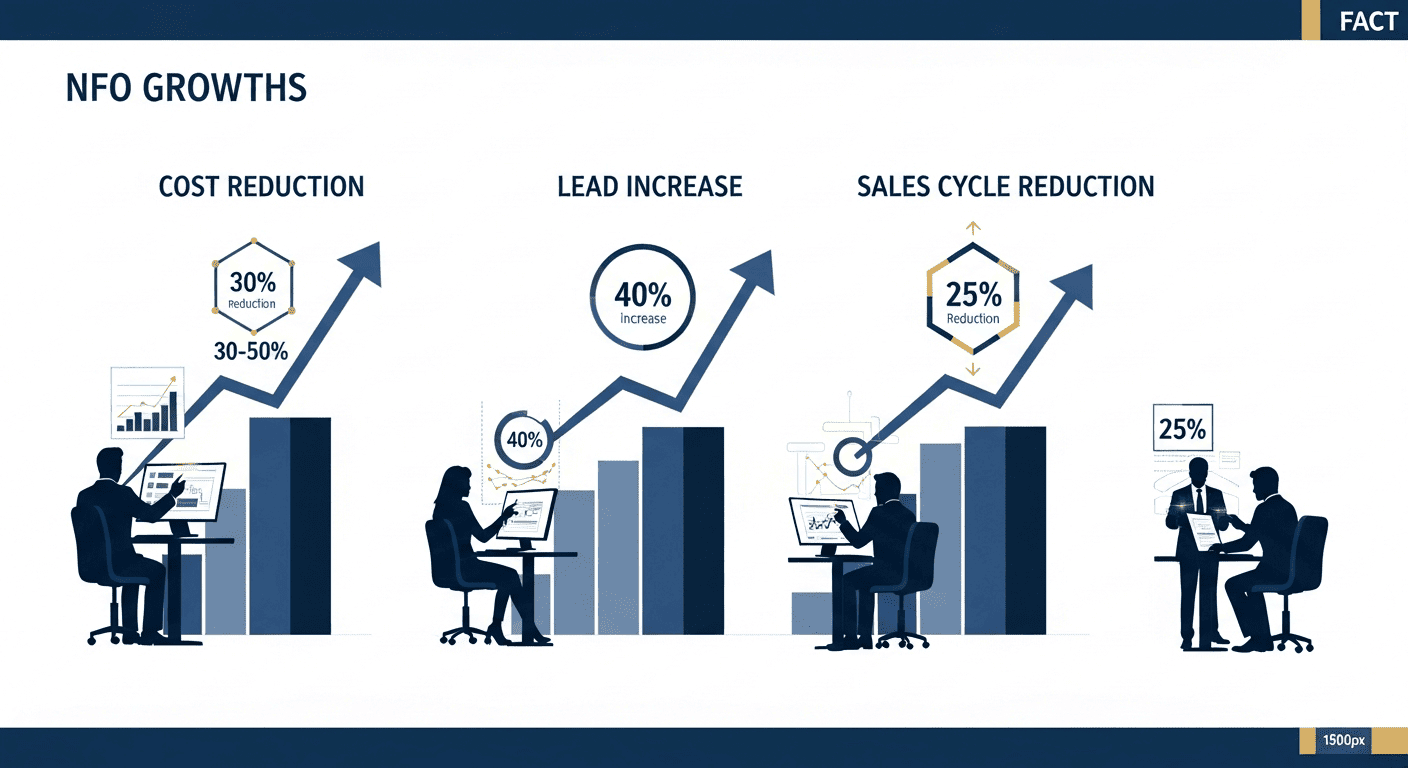
The business case for AI chatbot implementation extends beyond cost reduction. Organizations implementing quality AI chatbot solutions consistently achieve measurable financial returns:
Customer Service & Support
- Cost Reduction: 30-50% reduction in support operational costs through automation of routine inquiries
- Response Time: Average handle time reduction of 40%+ through AI assistance
- Case Study: Eye-oo increased sales by 25% and reduced customer service load by 82% through automated issue resolution
Sales & Revenue Growth
- Lead Qualification: 40% increase in sales-qualified leads through automated assessment
- Sales Cycle: 25% reduction in sales cycle length through chatbot-driven follow-up
- Conversion Improvement: E-commerce businesses see 15-40% conversion rate improvements
- Lead Generation: Automated lead capture without human intervention
Operational Efficiency
- Recruitment: 60% cost reduction in candidate screening processes
- Scalability: Unlimited simultaneous conversations without proportional cost increases
- Availability: 24/7 support availability reducing after-hours staffing needs
Adoption & Enterprise Acceptance
- 96% of IT leaders plan to increase AI agent usage in coming years
- 92% of Fortune 100 companies now use ChatGPT
- 75% of SMBs experiment with chatbot technology
How to Choose the Best AI Chatbot for Your Needs
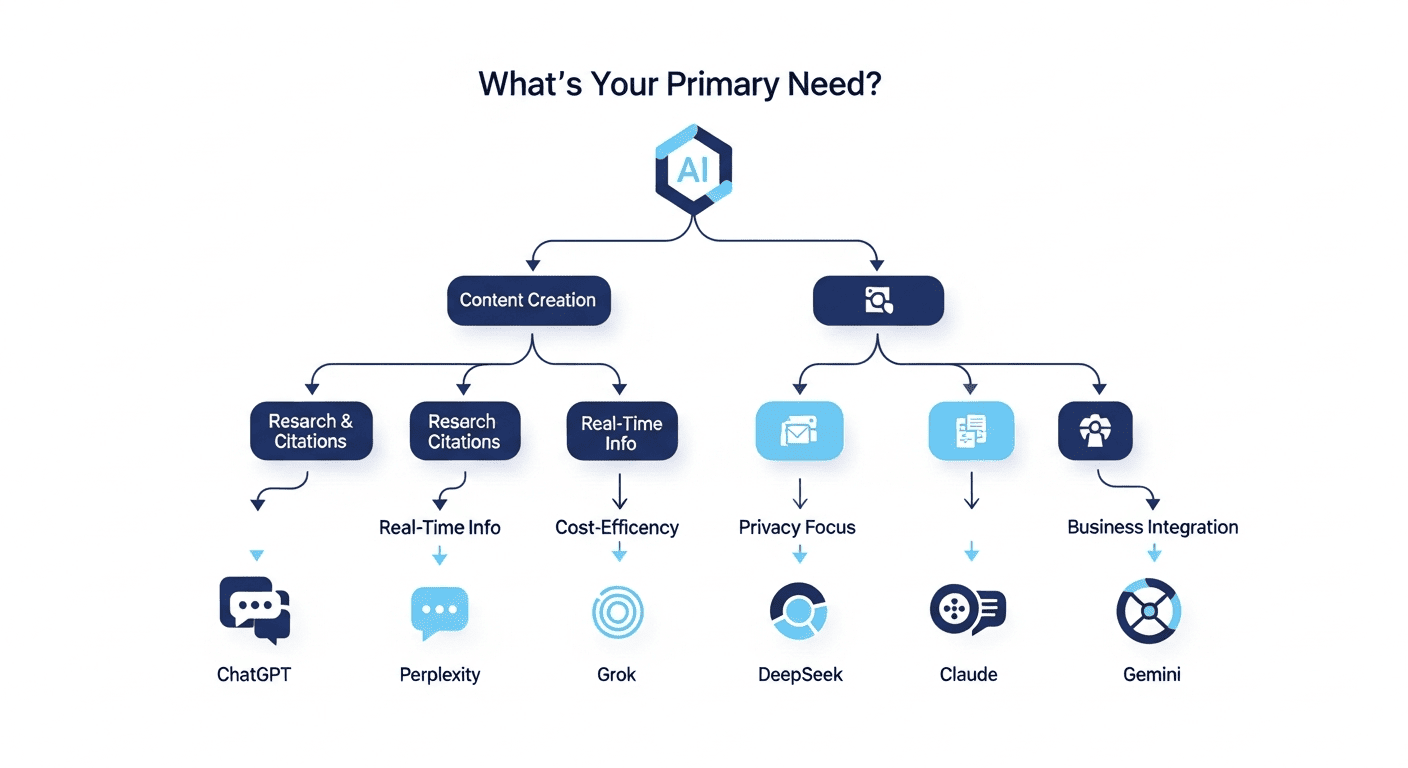
Selecting the optimal AI chatbot app depends on evaluating your specific requirements across several dimensions:
For General Productivity & Content Creation
Choose ChatGPT if you need versatility, the most features, and don’t mind premium pricing. The best overall choice for professionals across industries.
For Google Workspace Users
Choose Gemini for seamless integration, superior image generation, and better pricing within the Google ecosystem.
For Privacy & Ethical AI
Choose Claude for constitutional AI principles, excellent reasoning, and when data privacy concerns are paramount.
For Research & Citations
Choose Perplexity AI when transparent sourcing matters and you need evidence-based, cited information.
For Real-Time Information
Choose Grok when breaking news, current events, and social media trends are critical to your use case.
For Budget-Conscious Teams
Choose DeepSeek or HuggingChat for powerful AI capabilities without premium pricing.
For Microsoft Ecosystem Users
Choose Microsoft Copilot for seamless Office integration and enterprise deployment within Windows environments.
For Business Automation
Choose Tidio or HubSpot ChatSpot for customer service implementation with proven ROI metrics.
Evaluation Checklist
Before making your decision, consider:
- Your primary use case: Research, content creation, customer service, code development, creative tasks
- Required integrations: Does the app connect with tools you already use?
- Budget constraints: Free vs. $20/month vs. enterprise custom pricing
- Privacy requirements: How sensitive is your data and what are compliance obligations?
- Performance needs: Response speed, accuracy, creative ability, reasoning depth
- Ecosystem lock-in: Do you prefer one platform or flexibility across multiple AI services?
- Learning curve: How much customization and setup are you willing to manage?
Privacy, Security & Data Concerns
The rapid adoption of AI chatbots has surfaced legitimate concerns about data privacy and security that deserve serious consideration.
Key Privacy Risks Identified
Recent Stanford research identified several concerning practices across leading platforms:
Data Retention: Many platforms retain conversations indefinitely with unclear deletion policies. Users should review privacy settings and opt out of training data usage whenever possible.
Training Data Usage: Your conversations may be used to improve AI models unless you explicitly opt out. This raises concerns about proprietary information and sensitive data exposure.
Third-Party Data Sharing: Some platforms share user data with external partners:
- Meta.ai shares names and contact details
- Claude discloses email addresses and app interaction data
- Grok may share user-uploaded images
Children’s Data: Several platforms lack clear protections against training AI on children’s data—a regulatory concern under GDPR and other privacy frameworks.
Data Inference Risks: Even anonymized data can reveal sensitive information through inference. Specifying “low-sugar recipes” can lead classification as health-vulnerable, cascading to insurance and advertising decisions.
Privacy Best Practices
Protect yourself when using AI chatbots:
- Limit sensitive information: Avoid sharing personal health data, financial details, or proprietary business information
- Use privacy settings: Affirmatively opt out of data training where possible
- Review privacy policies: Understand each platform’s data retention and usage practices
- Use secure connections: Access chatbots only through official apps and secure networks
- Regular account review: Periodically review what data has been collected
- Separate accounts: Consider using different accounts for business vs. personal use
- Enable two-factor authentication: Protect account access with additional security layers
FAQ: Your Top Questions About AI Chatbot Apps Answered
Q1: Is ChatGPT free to use?
ChatGPT offers a free tier with limited GPT-4o access and slower responses. The free tier resets usage monthly. For unlimited access and faster response times, ChatGPT Plus ($20/month) is required. The free version remains fully functional for most users.
Q2: Which AI chatbot is best for writing and content creation?
ChatGPT excels for versatile writing across marketing copy, blog posts, and creative content. Claude stands out specifically for long-form, nuanced writing and academic content. For visual content, Gemini’s image generation capabilities are superior. Consider your specific writing needs when choosing.
Q3: Can AI chatbots help with coding and programming?
Absolutely. ChatGPT, Claude, and Gemini all provide excellent code completion, debugging, and explanation. Claude performs exceptionally well on complex software engineering tasks. DeepSeek offers cost-effective alternatives with GPT-4 equivalent reasoning. Specific language performance varies—test for your programming languages.
Q4: What’s the difference between free and paid AI chatbots?
Free tiers typically offer slower responses, message limits, and access to older models. Paid versions provide unlimited usage, faster responses, access to latest models, advanced features like image generation and file uploads, and priority support. For casual use, free tiers suffice. For professional work, premium subscriptions prove cost-effective.
Q5: Do AI chatbots remember previous conversations?
Most platforms maintain conversation history within individual chats but don’t retain context across separate conversations unless you explicitly enable memory features. Claude and some others offer optional memory settings to personalize responses across sessions. Always assume conversations are separate unless memory is explicitly enabled.
Q6: Which AI chatbot is most secure for business use?
No chatbot is perfect, but Claude is designed with security and ethical guidelines. For highly sensitive information, consider self-hosted options like HuggingChat or Tavern AI (with local deployment). Always review privacy policies and avoid sharing confidential data without encryption and proper safeguards.
Q7: Can businesses use AI chatbots for customer service?
Yes, extensively. Tidio, HubSpot ChatSpot, Botpress, and other business-focused platforms excel at customer service automation. Proven ROI includes 82% automatic issue resolution, 86% reduction in first-response time, and significant cost savings. Integration with CRM systems ensures customer context availability.
Conclusion: Finding Your Ideal AI Chatbot
The best AI chatbot app for you depends on your specific needs, budget, and priorities. ChatGPT remains the safest overall choice for its versatility, extensive features, and proven reliability across use cases. For Google ecosystem users, Gemini offers equivalent capabilities with better integration. Claude delivers superior reasoning for complex tasks. Perplexity excels at research. DeepSeek provides exceptional value for budget-conscious teams.
The explosive growth of AI chatbot usage—from 987 million people worldwide to projections reaching 95% of customer interactions by 2025—reflects genuine utility and business value. Organizations implementing quality AI solutions strategically report cost savings of 30-50%, conversion rate improvements of 15-40%, and significant productivity gains.
As you select your AI chatbot, balance capability with your actual needs. Test free tiers before committing to premium subscriptions. Stay informed about privacy practices and data usage. Evaluate integrations with your existing tools. And remember that the “best” AI chatbot isn’t a permanent choice—your needs will evolve, and new tools will emerge.
The future belongs to professionals and organizations that effectively leverage AI chatbot capabilities while maintaining ethical standards and protecting data privacy. Start experimenting today with free tiers, measure results against your goals, and scale thoughtfully as you discover genuine value.