

The search landscape has fundamentally transformed. What once meant ranking for blue links on Google now requires understanding AI-powered search engines, answer engines, and evolving user behavior. AI in SEO 2025 isn’t just a trend—it’s the new foundation for digital visibility.
In 2025, artificial intelligence has become the backbone of modern search. Google’s AI Overviews now appear in over 35% of U.S. desktop searches, transforming how users discover information. Meanwhile, AI search features like ChatGPT, Perplexity, and Microsoft Copilot are capturing increasing market share, pushing optimization beyond traditional search engines. Studies reveal that websites appearing in AI Overviews receive 35% more organic clicks compared to those not cited. This shift represents both a challenge and an unprecedented opportunity.
If you’re still optimizing for traditional keyword rankings alone, you’re missing critical traffic and visibility opportunities. This comprehensive guide explores how AI is reshaping SEO, what strategies work today, and how to future-proof your content for the intelligence-driven search era.
Part 1: Understanding AI’s Role in Modern SEO
How AI Is Changing Search Engine Algorithms
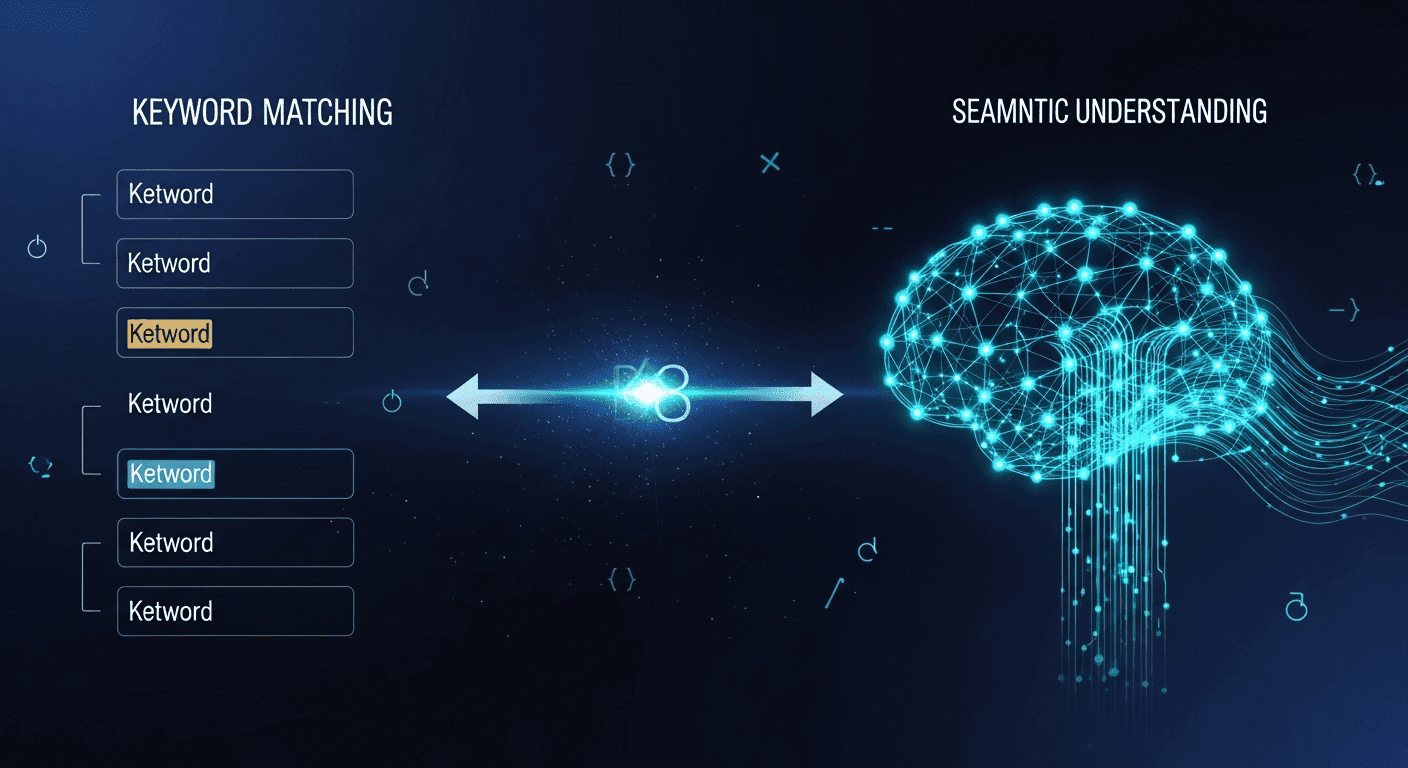
The shift from keyword matching to semantic understanding marks the most significant evolution in SEO since the algorithm’s inception. Traditional SEO focused on keyword frequency and placement—finding exact text matches for user queries. Modern AI algorithms, powered by large language models and natural language processing, approach search fundamentally differently.
Google’s BERT, RankBrain, and custom versions of Gemini 2.5 now interpret the meaning behind queries rather than matching keywords word-for-word. These systems understand context, user intent, and the relationships between concepts. When someone searches “how to cool a room without AC,” AI algorithms comprehend the underlying need—finding alternative cooling methods—rather than just matching the words “cool,” “room,” and “AC” independently.
This semantic approach means exact keyword matching is less important than comprehensive, intent-focused content. Search engines evaluate whether your content fully addresses the topic and the user’s underlying question. Machine learning models transform both queries and content into vector representations, measuring relevance by how closely they align in meaning space. This approach rewards depth, clarity, and topical authority over keyword density.
The Rise of Answer Engines and Zero-Click Searches
Search engines are becoming answer engines. Instead of asking “how do I rank first?”, the question now is “how do I become the trusted answer an AI provides?”
According to recent data, approximately 65% of searches now end without users clicking through to a website. Users get their answers directly from AI summaries, featured snippets, voice assistants, or knowledge graphs. Google’s AI Overviews exemplify this shift—they provide synthesized answers pulled from multiple sources, often without directing users to visit the original websites.
Pew Research found that users encountering AI summaries in Google results are dramatically less likely to click traditional search links. Only 8% of users who saw an AI overview clicked on a traditional result link, compared to higher click rates without summaries. Approximately 27% of searches with AI Overviews resulted in zero clicks—users finding their answer completely within the SERP.
This “Great Decoupling” means rising impressions and visibility don’t always translate to increased traffic. However, getting cited in AI Overviews dramatically improves outcomes. Sites cited in AI Overviews receive 91% more paid clicks and 35% more organic clicks than uncited sites. This fundamentally changes how success is measured and pursued.
Semantic Search and Natural Language Processing
Natural language processing (NLP) forms the foundation of AI-driven search. NLP enables systems to understand the nuances, context, and intent embedded in human language—not just recognize word matches.
Key NLP capabilities transforming SEO include:
- Named Entity Recognition: Identifying key terms and concepts within large text volumes to create more accurate indexes
- Synonym and Related Term Understanding: Recognizing that “vehicle” and “car” are related, or that “Python” could refer to a programming language or snake depending on context
- Part-of-Speech Recognition: Understanding grammatical relationships to ensure generated content and indexed pages maintain correct sentence structure
- Sentiment and Intent Classification: Detecting user emotions and underlying objectives to deliver relevant results
Semantic search interprets meaning by mapping queries and content into vector spaces where similar concepts cluster together. This allows search engines to find relevant results even when exact keywords don’t appear. For SEO professionals, this means creating content that comprehensively covers topics, addresses user intent, and uses natural language patterns is far more valuable than keyword optimization tactics.
Part 2: Key AI-Driven SEO Strategies for 2025
Answer Engine Optimization (AEO): The New SEO Frontier
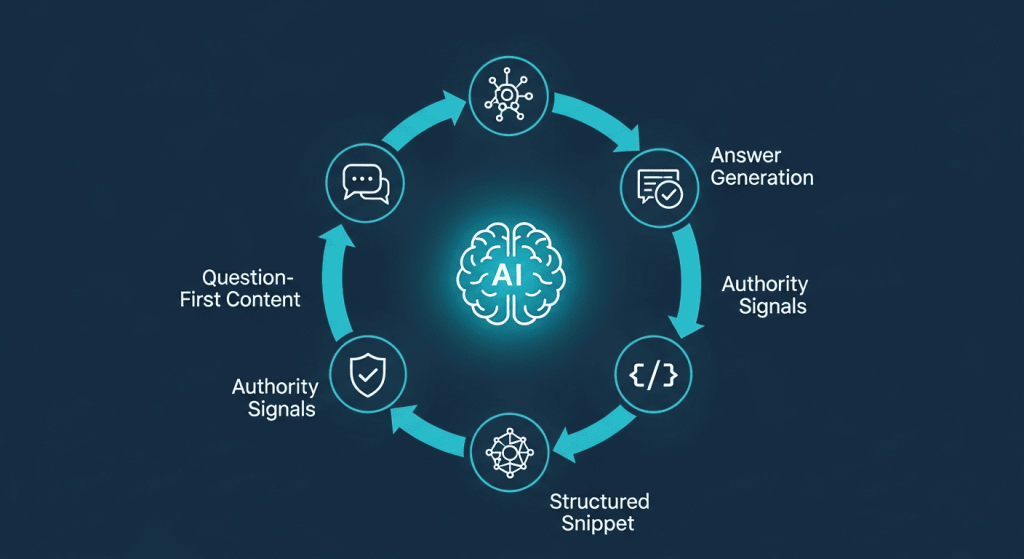
Answer Engine Optimization represents a fundamental shift in how we approach search visibility. Where traditional SEO aims for high rankings, AEO positions your content as the direct, trusted answer an AI system provides to users.
Core AEO principles include:
- Question-First Content Structure: Instead of focusing on keywords, structure content around specific questions users ask. Begin with concise, direct answers (40-60 words), then expand with supporting details.
- Featured Snippet Optimization: AI systems frequently pull featured snippets for answer generation. Winning snippet formats include:
- Paragraph answers for definition and explanation queries
- Lists for “how-to” and “steps” questions
- Tables for comparison queries
- Q&A formats for complex, multi-part questions
- Structured Data Implementation: Schema markup helps AI systems understand your content structure and context. Key schema types for AEO include:
- FAQPage: For Q&A content
- HowTo: For procedural content
- Article: For comprehensive editorial content
- LocalBusiness and Organization: For local and branded content
- Conversational Keyword Integration: Target long-tail, question-based queries that mirror natural speech patterns. Instead of “best SEO tools,” target “what are the best AI SEO tools for 2025?”
- Authority and Trust Signals: AI systems prioritize content demonstrating expertise and credibility. This includes author bios with credentials, cited sources, original data, and comprehensive citations.
Over 83% of featured snippets appearing in January 2025 were replaced by AI Overviews by August—highlighting the rapid evolution of search features. Success requires optimizing for both formats simultaneously.
E-E-A-T: The Foundation for AI Visibility
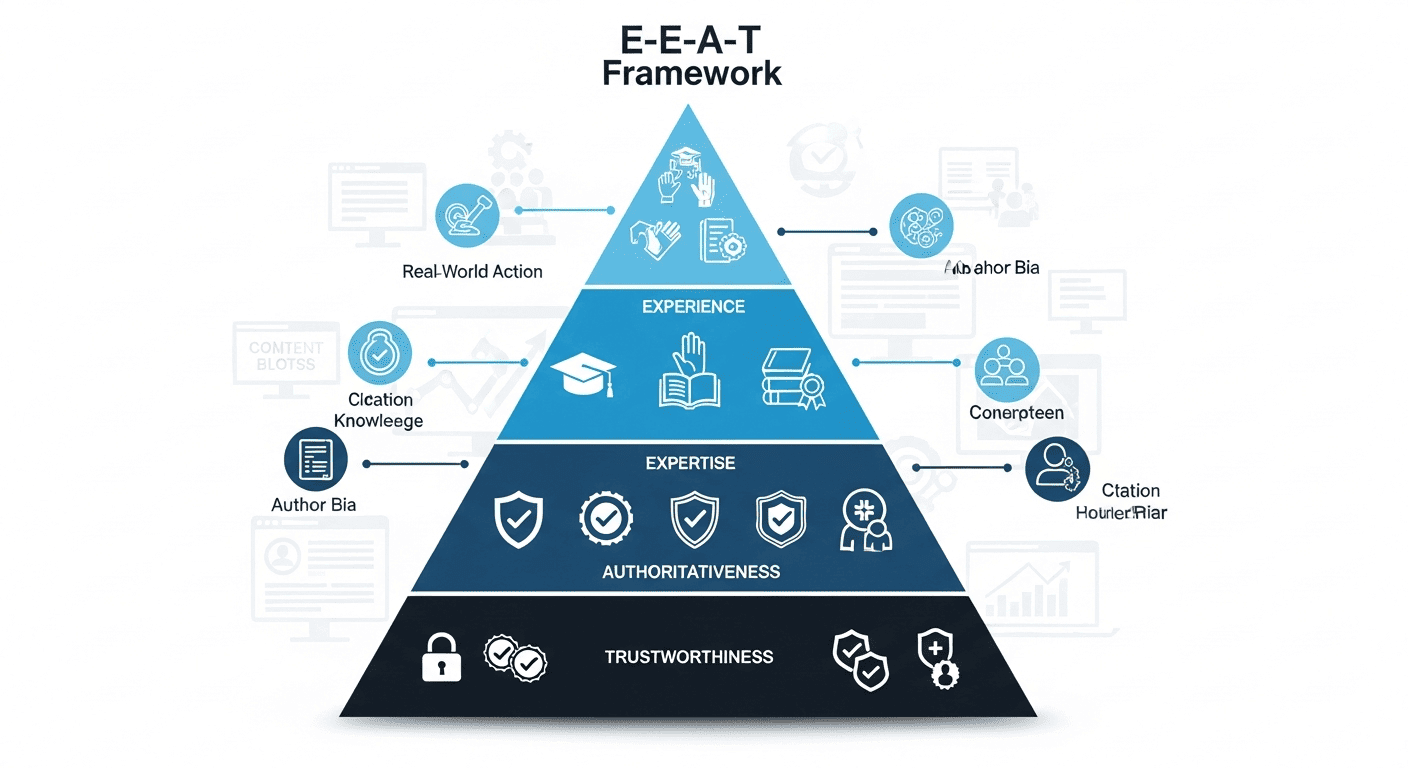
E-E-A-T (Experience, Expertise, Authoritativeness, Trustworthiness) has become the quality baseline for all digital visibility channels—traditional search, AI Overviews, and large language model outputs.
AI systems select content for citation based on E-E-A-T signals. Google has confirmed that AI Overviews ground responses in high-quality results identified by core ranking systems aligned with E-E-A-T concepts. Studies show 52% of AI Overview citations come from top 10 organic results, and the majority cite high-reputation domains.
Implementing E-E-A-T for AI visibility:
- Demonstrate Expertise: Create topic clusters showing comprehensive domain knowledge. Use internal linking reinforcing topical authority relationships. Maintain consistency in terminology and concept usage.
- Show Experience: Include first-hand knowledge, personal case studies, and real-world examples. Avoid generic, surface-level explanations. Provide evidence of direct experience with topics you discuss.
- Build Authoritativeness: Develop strong author credentials and contributor biographies. Acquire citations from other authoritative sources in your field. Build topical authority clusters that signal expertise across related subjects.
- Establish Trust: Cite sources properly and transparently. Display author expertise clearly. Update content regularly with fresh information. Follow transparent editorial processes. Use proper security (HTTPS), clear contact information, and accurate metadata.
Content with stronger E-E-A-T characteristics advances through AI selection processes, making it more likely to appear in AI Overviews and receive citations from AI platforms like ChatGPT drive the need for ChatGPT SEO Optimization strategies that ensure your content is cited in AI summaries and answer engines..
Generative Engine Optimization (GEO) and AI Content Strategy
Generative Engine Optimization optimizes content specifically for AI-powered search environments. Unlike traditional SEO, GEO requires understanding how generative models interpret and extract content.
GEO best practices include:
- Citation-Ready Content Formatting:
- Structure answers in 40-80 word “answer nuggets” providing complete thoughts
- Use descriptive H2 and H3 headings that clearly indicate content topics
- Create tables and lists for easy AI extraction
- Include visual assets with descriptive alt text
- Topical Authority Through Content Clusters:
- Build pillar pages covering broad topics comprehensively
- Create cluster pages diving deeper into specific subtopics
- Interlink pillar and cluster pages to reinforce authority
- Use semantic keywords and LSI terms throughout the network
- AI-Generated Content That Works:
- Google has confirmed AI-generated content faces no inherent penalties—quality determines rankings
- 67% of businesses report improved content quality and marketing ROI after integrating AI into content workflows
- Combine AI efficiency with human expertise: use AI for research, outlining, and drafting, but enhance with original insights and fact-checking
- Avoid generic AI content lacking depth or insight; focus on providing real value
- Intent-Focused Optimization:
- Analyze search intent thoroughly—informational, navigational, transactional, commercial investigation
- Create content matching the specific intent behind target queries
- Address all information needs comprehensively within single pieces
Research indicates websites using AI-generated content grew 5% faster than others, while human-written sites showed 4% lower susceptibility to Google updates. The optimal approach balances AI’s efficiency with human expertise and original insights.
Part 3: Technical and Tactical Implementation
Structured Data and Schema Markup for AI Search
Structured data communicates directly to AI systems, clarifying your content’s meaning and context. As AI search dominates, schema markup becomes essential infrastructure.
Essential schema implementations for 2025:
| Schema Type | Best For | Citation-Friendly Format |
|---|---|---|
| FAQPage | Question-focused content | Markup aligned with visible headings |
| Article | News and editorial content | AuthorBio and datePublished fields |
| HowTo | Procedural guides | Step-by-step structures with descriptions |
| Organization | Company and brand information | Comprehensive entity relationship data |
| LocalBusiness | Location-based services | Address, phone, hours, reviews |
| Breadcrumb | Site navigation | Clear hierarchical structure |
AI systems use structured data to verify accuracy, understand context, and identify extraction opportunities. Proper markup significantly increases citation likelihood in AI Overviews and other answer engine results.
Implementation best practices:
- Use JSON-LD as your primary structured data format (cleaner, easier to maintain)
- Ensure markup accuracy over complexity (hallucinated data ruins citations)
- Align schema with visible on-page content (schema not reflecting visible content reduces extraction chances)
- Implement entity relationships showing how content pieces connect topically
Voice Search Optimization in the AI Era
Voice search represents a growing channel requiring distinct optimization strategies. Voice queries are typically longer, more conversational, and question-based compared to text searches.
Voice SEO fundamentals:
- Conversational Keywords: Target long-tail keywords matching natural speech patterns. Instead of “best restaurants NYC,” optimize for “what are the best restaurants near me in New York City?”
- Featured Snippet Prioritization: Voice assistants frequently read featured snippets aloud. Optimize for snippet formats to capture voice traffic.
- Local SEO Enhancement: Many voice searches are location-based (“what’s the best coffee shop near me?”). Maintain accurate local business information, optimize for local keywords, and build location-specific content.
- Fast Page Speed and Mobile Optimization: Voice searches predominantly occur on mobile devices. Prioritize Core Web Vitals—Largest Contentful Paint, First Input Delay, Cumulative Layout Shift.
- Natural Language Patterns: Use conversational phrasing and question-based formatting throughout your content. FAQ sections directly address voice search queries.
Topical Authority and Content Clustering
Building topical authority—establishing your website as a comprehensive resource on specific subjects—is now essential for AI visibility.
Content cluster strategy:
- Pillar Page: A comprehensive guide covering the main topic broadly (typically 2,500-4,000+ words)
- Cluster Pages: Detailed articles addressing specific subtopics (typically 1,500-2,500 words)
- Internal Linking Architecture: Pillar pages link to all cluster pages; cluster pages link back to pillar and related clusters
- Semantic Keywords: Use LSI keywords and related terms throughout the cluster network
AI algorithms assess topical authority by analyzing knowledge consistency across multiple content pieces, not individual page optimization. A cluster on “AI in digital marketing” might include pillar content on the topic, cluster pages on AI in email marketing, AI in advertising, AI in analytics, AI in content creation, and so on. This network signals comprehensive expertise to search engines.
Keyword Research in the AI Age
AI-powered keyword research now goes far beyond basic volume and difficulty metrics.
Modern keyword research includes:
- Intent Clustering: AI tools group keywords by search intent (informational, navigational, transactional, commercial investigation) rather than surface-level text matching
- Trend Prediction: Machine learning algorithms identify emerging keywords before they become competitive, allowing first-mover advantages
- Semantic Relationship Analysis: Understanding how keywords relate conceptually, not just by keyword similarity
- Question Pattern Identification: AI tools identify how users phrase questions, enabling precise long-tail targeting
- Opportunity Identification: Finding high-potential keywords based on complex patterns—your site’s topical authority, content gaps, and emerging opportunities
Tools like MarketMuse, Clearscope, and SEO.ai automate this analysis, identifying content gaps, providing data-informed briefs, and generating on-page recommendations that drive measurable CTR and conversion improvements.
Part 4: AI-Powered SEO Tools and Automation
Essential AI SEO Tools for 2025
Content Creation and Optimization:
- Semrush: Full-stack platform with AI-powered writing assistant, site audits, and AI visibility tracking for answer engines
- Clearscope: AI content optimization with topic planning and chatbot visibility tracking
- MarketMuse: AI-driven content planning, topic mapping, and content gap analysis for topical authority building
- Jasper: Generative AI tool for drafting blog posts, product descriptions, and marketing copy
- Surfer SEO: AI content scoring and optimization recommendations based on top-ranking competitors
Technical and Automation Tools:
- Alli AI: Automates technical SEO tasks, on-page optimization, and CMS updates across multiple websites
- SEO.ai: Real-time on-page optimization with AI-powered internal linking recommendations
- Gumloop: Workflow automation platform for automating repetitive SEO tasks
- Otto SEO: AI agent creating complete SEO strategies, outlines, and briefs
Analysis and Predictive Tools:
- Semrush AI Assistant: Real-time SERP analysis and competitive intelligence
- ZipTie.dev: Monitoring brand presence and citations in AI search results
- Yext: Structured data optimization for traditional and AI search visibility
Automating SEO Workflows
AI automation accelerates routine SEO tasks, freeing teams for strategic work.
Key automation opportunities:
- Technical Audits: Automated systems detect broken links, duplicate content, missing meta descriptions, and schema markup issues in seconds—tasks that previously required hours of manual work
- Meta Tag Generation: Input keywords and content; AI generates optimized titles and meta descriptions immediately
- XML Sitemap Updates: AI automatically creates and maintains sitemaps, improving indexing efficiency
- Internal Linking: AI systems analyze topical relationships and automatically create internal linking recommendations based on context and semantic relevance
- Schema Markup Creation: Automated systems recommend and implement appropriate schema markup based on content type and context
- Content Monitoring: Set up alerts for ranking changes, new SERP features, competitor movements, and featured snippet shifts
These automation capabilities mean SEO professionals can focus on strategy, content quality, and competitive advantage rather than repetitive technical tasks.
Part 5: Measuring Success in AI-Driven Search
Moving Beyond Traditional Metrics
The rise of AI search requires redefining success metrics. Traditional CTR and rankings alone no longer capture the full picture.
Essential metrics for AI-driven SEO:
- AI Visibility and Citations: Track whether content appears in AI Overviews, ChatGPT citations, and Perplexity results. Tools like Semrush, Clearscope, and ZipTie monitor AI surface performance.
- Featured Snippet Presence: Monitor positions in featured snippets, People Also Ask boxes, and rich results. These placements drive AI answer generation.
- E-E-A-T Signal Development: Track author credentials, citation patterns, topical authority expansion, and trust signal implementation
- Content Gap Performance: Measure performance improvements from newly created content addressing identified gaps
- Conversion Quality: Focus on conversion metrics beyond traffic volume. AI-driven visitors often have higher purchase intent and conversion rates
- Attribution and Impact: Link organic visibility changes to conversions and revenue using GA4 and attribution tools
- Ranking Stability: Monitor whether your content maintains positions during core algorithm updates (E-E-A-T-focused content typically shows lower volatility)
Real-Time Optimization and Feedback Loops
Modern AI SEO platforms provide continuous optimization feedback.
Implementing feedback loops:
- Use tools with built-in learning mechanisms adjusting strategies based on performance data
- Monitor A/B test results on titles, meta descriptions, and content structures
- Implement automatic change tracking correlating edits with performance fluctuations
- Create quarterly review processes analyzing what worked and refining approaches
Frequently Asked Questions
Q1: Is SEO dying because of AI Overviews?
No—SEO is evolving, not dying. While AI Overviews reduce some clicks, they also create new opportunities. Sites cited in AI Overviews receive 35% more organic clicks and 91% more paid clicks than uncited sites. The shift requires optimizing for answer engines and E-E-A-T rather than abandoning SEO entirely. Focus on creating authoritative, comprehensive content positioned as direct answers to user questions.
Q2: Should I use AI-generated content for my website?
Google allows AI-generated content with no inherent penalties—quality determines rankings. The key is combining AI efficiency with human expertise. Use AI for research, outlining, and drafting, then enhance with original insights, fact-checking, and experience-based examples. Content created entirely by AI without human enhancement or value addition typically underperforms. Websites using responsibly integrated AI content grew 5% faster than those relying solely on traditional methods.
Q3: How important is E-E-A-T for AI search optimization?
E-E-A-T is foundational for all digital visibility channels in 2025—traditional search, AI Overviews, and large language models. AI systems select content for citation based on E-E-A-T signals. Building strong author credentials, demonstrating expertise through topical depth, showing real experience, and establishing trust through citations and transparency directly impacts AI visibility. This isn’t optional; it’s essential.
Q4: What’s the difference between AEO, GEO, and LLMO?
- Answer Engine Optimization (AEO): Positioning content as direct answers to user queries across answer engines like ChatGPT and Perplexity
- Generative Engine Optimization (GEO): Optimizing content specifically for AI-powered search environments like Google’s AI Overviews
- Large Language Model Optimization (LLMO): Ensuring content appears in outputs from large language models like ChatGPT, Claude, and Gemini
All three focus on AI visibility but target different platforms and formats. Success requires optimizing for all simultaneously since citations often appear across multiple channels.
Q5: How can I build topical authority with AI?
Use AI to accelerate the process: generate topic clusters, identify content gaps, create outlines, and structure content networks. However, supplement AI with human expertise. Create a pillar page comprehensively covering your main topic, then develop cluster pages diving into specific subtopics. Use AI to identify semantic relationships and optimize internal linking. Focus on creating genuinely valuable, original content rather than relying on AI generation alone. Topical authority requires demonstrating real expertise across multiple interconnected pieces of content.
Q6: How does voice search optimization differ from traditional SEO?
Voice searches are conversational, question-based, and typically longer than typed queries. Voice search optimization requires targeting long-tail keywords matching natural speech patterns, prioritizing featured snippets, optimizing for local search (many voice queries are location-based), ensuring fast page speed and mobile-friendliness, and using natural language patterns throughout your content. Focus on how people actually speak, not how they type.
Q7: What schema markup should I implement first?
Start with FAQPage, Article, and Organization schema based on your content type. These provide foundational structured data helping AI systems understand your content. As you progress, add HowTo for procedural content, LocalBusiness for location-based services, and specific entity schemas for your industry. Use JSON-LD format, ensure accuracy over complexity, and align markup with visible content.
Conclusion: The AI-First SEO Future

The SEO landscape of 2025 differs fundamentally from what worked just years ago. AI has transformed search from a keyword-matching system into an intelligence-driven ecosystem focused on understanding meaning, context, and user intent.
Success in this new environment requires embracing AI-first optimization strategies: positioning your content as direct answers to user questions, building topical authority through comprehensive content clusters, implementing E-E-A-T principles across all digital channels, using structured data to help AI systems understand your content, and combining AI efficiency with human expertise and originality.
The brands dominating 2025 search results aren’t those optimizing for keywords anymore—they’re the ones creating authoritative, experience-backed content that genuinely answers user questions and demonstrates expertise. They’re leveraging AI tools to scale their efforts while maintaining quality and originality. They’re monitoring AI visibility, measuring success beyond CTR, and continuously optimizing based on performance feedback.
The shift toward AI-powered search represents an opportunity for brands willing to adapt. By implementing the strategies in this guide, you can improve visibility across traditional search, AI Overviews, answer engines, and large language models simultaneously.
Ready to transform your SEO for the AI era?
Start by auditing your current content against AEO principles—are you positioning content as direct answers? Then assess your E-E-A-T signals—are credentials, expertise, and trust evident? Finally, implement structured data and build topical authority clusters around your core topics. Small improvements across these areas compound into significant competitive advantages.
The future of search isn’t just AI-enhanced—it’s AI-first. Position yourself accordingly.