

Imagine receiving an email from your bank asking you to verify your account. The message has perfect grammar, matches your bank’s tone and style, and includes specific details about your account. Your finger hovers over the link. But there’s a problem—it’s fake. Welcome to the age of AI-generated phishing emails, where crafting a convincing scam takes minutes instead of hours, and distinguishing real messages from fake ones has become genuinely difficult.
Why do phishing emails generated by AI seem so real? The answer lies in how artificial intelligence has fundamentally changed the phishing game. Unlike traditional phishing attempts loaded with typos and generic greetings, AI-powered attacks leverage sophisticated language models to generate grammatically perfect, highly personalized, and contextually relevant messages. A 2024 Harvard study found that AI-generated phishing emails achieved a shocking 54% click-through rate, compared to just 12% for human-written phishing messages. That’s 4.5 times more effective.
This article explores the technology behind AI phishing, why these emails feel authentic, the real-world impact on organizations, and most importantly, how you can protect yourself. The stakes are high—recent data shows that 82.6% of phishing emails now involve some form of AI, and attackers save 95% on campaign costs by automating the process.
The AI Phishing Explosion: By The Numbers
The statistics tell a sobering story about the speed and scale of AI-enhanced phishing attacks:
- 82.6% of phishing emails are now created using AI in some form
- 1,265% surge in AI-driven phishing attacks since 2023
- 54% success rate for AI-generated phishing versus 12% for human-written emails
- 40% faster email composition using generative AI tools
- 60% of recipients fall for AI-generated phishing emails
- 95% cost reduction for attackers using language models
But what’s most concerning is the efficiency gain. In one study, security researchers created a fully functional fake password-reset email and landing page in approximately 20 seconds using a single ChatGPT prompt. The page looked virtually indistinguishable from the genuine login portal.
How Language Models Make Phishing Emails Feel Real
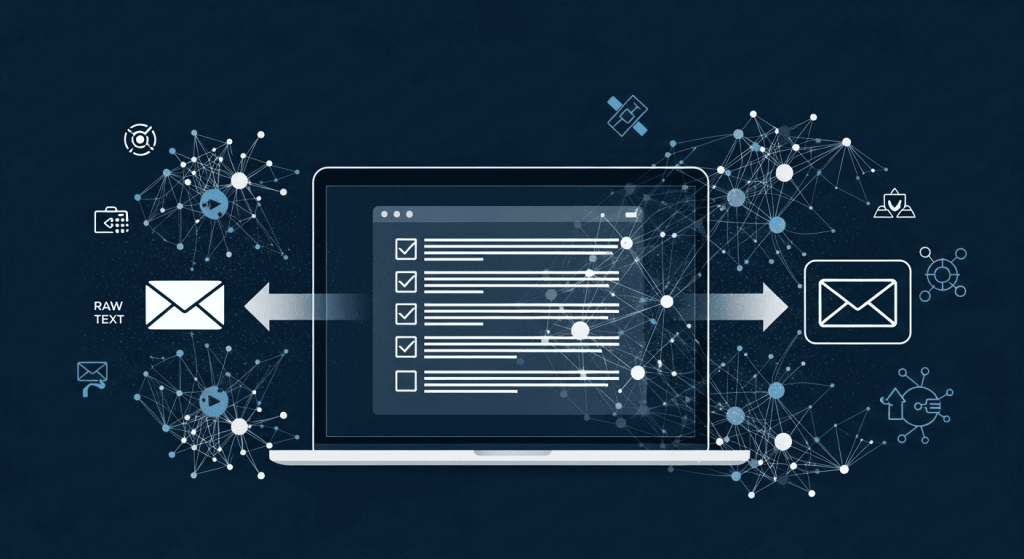
The Power of Perfect Grammar and Tone
Traditional phishing emails were often caught by simple red flags: grammatical errors, awkward phrasing, poor formatting. These telltale signs tipped off vigilant users immediately. AI changed this entirely.
Modern language models like GPT-4, Claude, and other large language models (LLMs) can generate text that’s not just grammatically correct—it’s eloquent. These AI systems have been trained on billions of examples of human writing and can replicate virtually any communication style. They understand context, nuance, and emotional tone in ways traditional tools never could.
When an attacker prompts an AI to “write a password-reset email in the tone of our bank,” the model doesn’t just produce generic text. It mimics banking industry conventions, incorporates urgency appropriately, and maintains professional distance while creating rapport. The result reads like it came from a real person, because in many ways, it did—it was trained on thousands of real emails.
Hyper-Personalization at Scale
One of the biggest reasons AI phishing seems so real is personalization. Traditional bulk phishing campaigns couldn’t afford to customize each email—that required human effort. AI changes everything.
Using publicly available data from LinkedIn, social media, company websites, and data brokers, AI can build detailed profiles of targets. An attacker can feed this information into a language model with a prompt like: “Create a personalized phishing email for Jane Smith, a finance director at Acme Corp, who recently posted about a conference she attended.” The resulting email mentions the conference, references Jane’s specific role, and uses details that would be impossible for a generic attack to include.
This personalization dramatically increases effectiveness. Research shows that spear phishing emails incorporating personal details achieve significantly higher click-through rates than generic messages. With AI handling the reconnaissance and personalization automatically, attackers can scale this approach to thousands of targets in hours.
The Evasion of Traditional Security Filters
Email security systems traditionally work by looking for patterns. They might flag emails with certain keywords like “urgent action required” or “verify your account immediately.” They also check for malicious links or attachments that match known threats.
AI-generated phishing defeats these defenses in multiple ways:
Dynamic content variation ensures no two emails are identical. An attacker can generate 1,000 slightly different versions of the same phishing message, each with different subject lines, greeting variations, and subtle word choices. Since security systems often look for duplicate patterns, this polymorphic approach makes detection exponentially harder.
Linguistic sophistication means the text itself avoids obvious trigger phrases. Instead of “URGENT: Click here immediately,” an AI-written message might say: “We noticed unusual activity on your account last Tuesday. Your security is important to us, so we’d like you to verify your details whenever convenient.” It’s urgent without being obviously suspicious.
Context awareness is perhaps the most unsettling aspect. AI can reference legitimate business activities, recent company announcements, or actual projects the target is working on. This contextual accuracy makes the email feel authentic because, in many respects, it contains factual information—it’s just weaponized.
Deepfake Enhancement: Beyond Email
The threat extends beyond text. AI isn’t limited to generating phishing emails; it’s increasingly used to create audio and video impersonations.
Voice phishing, or “vishing,” using AI voice cloning has become a critical threat. Attackers need only a few minutes of audio—from a podcast, webinar, or company presentation—to clone a CEO’s voice with stunning accuracy. In one 2025 case, a European energy company lost $25 million when an AI-cloned voice of their CFO authorized a wire transfer. The deepfake was convincing enough that the employee didn’t question it in real-time.
Recent data shows deepfake-enabled vishing surged by 1,633% in the first quarter of 2025 compared to the end of 2024. These multi-channel attacks combine email with voice calls and sometimes video, creating a unified impersonation that’s increasingly difficult to question.
Why Traditional Detection Fails
The Limitations of Signature-Based Security
Email filters traditionally work by maintaining blocklists and signatures—known malicious patterns they look for. But AI generates so many variations that signature-based detection becomes impractical.
Consider this: if a traditional phishing campaign sends 10,000 identical emails, security systems can catch them all by identifying one signature. If an AI campaign sends 10,000 emails where each is slightly different—different wording, different sender addresses, different formatting—creating a signature for each becomes impossible.
71% of AI detectors fail to identify AI-generated phishing emails, according to research from Egress. This statistic is particularly alarming because many organizations rely on these AI-powered security tools as their primary defense.
The 54% Success Rate Reality
Perhaps most concerning is that despite all our security advances, AI phishing still achieves approximately 60% success rates, comparable to traditional human-crafted attacks. This suggests two uncomfortable truths:
First, many recipients don’t read emails carefully enough to catch subtle inconsistencies. Second, AI has eliminated the most obvious red flags that used to trigger skepticism. When an email is perfectly written, addresses you by name, references real projects, and uses appropriate tone—most people will engage with it, even if some instinct suggests caution.
The research on this is compelling. Harvard researchers found that AI-generated emails tricked participants into clicking at rates matching expert-crafted scams. Across multiple studies, organizations report that AI-enhanced phishing bypasses traditional email security gateways with alarming frequency.
Real-World Impact: Business Email Compromise and Beyond
The BEC Problem
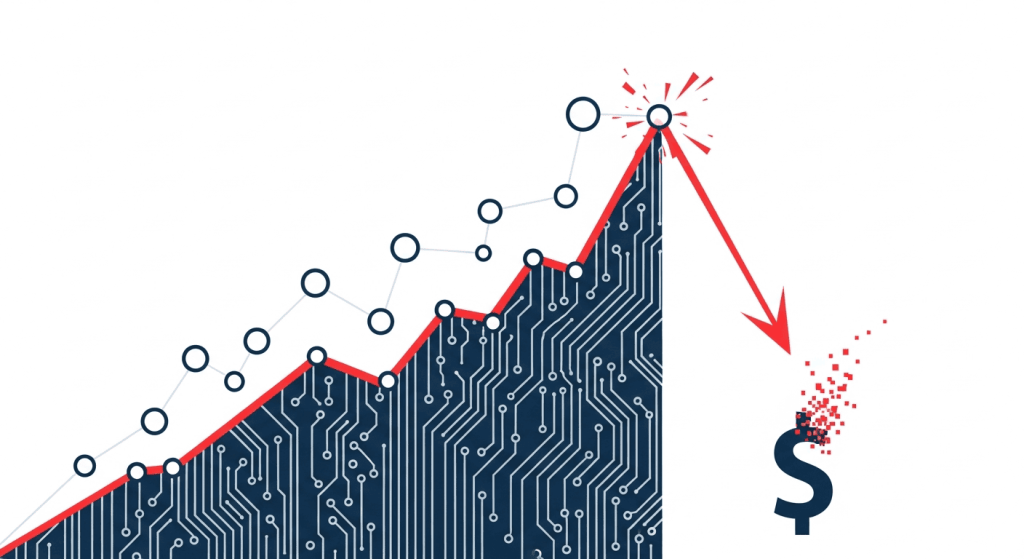
Business Email Compromise (BEC) attacks represent the highest-value phishing threat. These aren’t attempts to steal passwords; they’re sophisticated fraud targeting financial transactions. In 2024, BEC attacks accounted for 73% of cyber incidents, with an average cost of $4.89 million per breach.
AI has supercharged BEC attacks. In one infamous case, a scammer impersonating a hardware vendor cost Facebook and Google a combined $121 million. The attacker simply sent convincing invoices requesting wire transfers to fraudulent accounts. With AI-generated emails appearing to come from known vendors and using appropriate business language, distinguishing legitimate requests from fraud becomes nearly impossible for overworked finance teams.
Cost Savings for Attackers
For cybercriminals, the economics are staggering. Traditional phishing campaigns required hiring skilled social engineers to craft messages, test approaches, and manage campaigns manually. This was expensive and time-consuming.
AI reduces these costs by 95% while dramatically increasing scale. What previously took a team of experts 16 hours to craft can now be created in 5 minutes with a simple prompt. This cost advantage creates perverse incentives—phishing becomes more profitable and therefore more attractive to criminal organizations.
The 1,265% Surge
Since generative AI tools became widely available in 2022-2023, phishing attack volumes have exploded. A 1,265% increase in AI-driven phishing attacks has been documented by threat intelligence firms. This isn’t just more emails; it’s more successful emails.
Organizations are struggling to keep up. Security teams report being overwhelmed not by a few sophisticated attacks, but by waves of high-quality, polymorphic campaigns that each slightly differ from the last.
The Four Pillars of AI Phishing Success
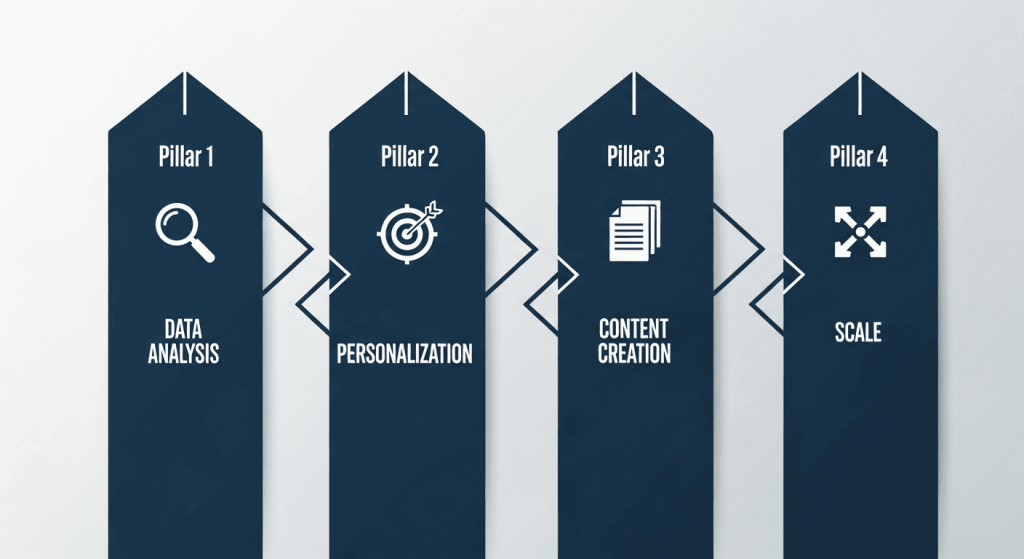
Security researchers have identified four key capabilities that make AI phishing so effective:
1. Data Analysis
AI systems can rapidly analyze enormous datasets about targets. Using publicly available information from LinkedIn, company websites, social media, and data broker databases, attackers build detailed profiles. An AI can determine that a specific employee manages vendor relationships, has been recently promoted, or attended a particular conference—all within seconds.
2. Personalization
Armed with this data, language models create tailored messages that reference specific personal details, professional context, and situational relevance. This personalization creates the psychological phenomenon known as “social proof”—if the email knows this much about me, it must be legitimate.
3. Content Creation
AI generates not just emails but entire attack ecosystems. Fake password-reset pages, forged invoice templates, and fraudulent document previews can all be generated in minutes. The content is visually accurate, functionally correct, and contextually appropriate.
4. Scale
Because AI can automate everything from reconnaissance to message generation to landing page creation, attackers can now target thousands of people with highly personalized, sophisticated attacks. Previously, this type of campaign would require a team; now it requires only prompts and time.
How to Spot AI-Generated Phishing Emails
Despite their sophistication, AI-generated phishing emails still display detectible patterns when you know what to look for:
Check the Sender Domain Carefully
Look beyond the display name at the actual email address. Attackers often register domains that look similar to legitimate ones. A phishing email might appear to come from “support@companyname-secure.com” when the real domain is “support@companyname.com.” The hyphen is the giveaway.
Some attackers use character substitution—replacing “l” with “i” or “O” with “0”—to create domains that look almost identical at first glance.
Examine Links Before Clicking
Never click a link without hovering over it first to see the actual destination. AI-generated phishing often uses URL shorteners, redirect chains, or suspicious domains that don’t match the supposed sender.
Ask yourself: If this email is from your bank, why does the link point to a completely different domain?
Review Email Headers
This requires a bit of technical knowledge, but email headers reveal the actual path your message took to reach you. Most email clients allow you to view full headers (often through a “View Original” or “Show Message Source” option).
Suspicious indicators include:
- Multiple redirect servers before reaching you
- Mismatches between the displayed sender and the actual originating server
- Missing or failing authentication checks (SPF, DKIM, DMARC)
Look for Unusual Sending Patterns
AI-powered campaigns sometimes hide real targets in the BCC field while using identical recipient and sender addresses in the visible fields. This helps bypass basic security filters but creates an unusual pattern if you notice it.
Legitimate company emails won’t use this technique.
Verify Suspicious Requests
Even if an email appears authentic, unusual requests should trigger verification. AI-generated spear phishing might reference real projects or people, but it will often request actions outside normal procedures.
If someone claiming to be your CEO asks for urgent wire transfers via email instead of using established financial procedures, verify directly through known phone numbers or internal systems.
Look for Emotional Manipulation
AI is particularly skilled at using emotional appeals. Research comparing AI-generated and human-written phishing found that AI-generated attacks used complex emotional manipulation techniques 92.5% of the time versus 56.5% for conventional phishing.
Urgency, fear, or flattery—especially unexpected flattery—should raise your skepticism.
Tools and Technologies for Detection and Prevention
Email Authentication Protocols
The most effective technical defense involves implementing three complementary email authentication standards:
SPF (Sender Policy Framework) specifies which mail servers are authorized to send email from your domain. When implemented correctly, SPF prevents attackers from spoofing your domain.
DKIM (DomainKeys Identified Mail) adds a cryptographic signature to each email, proving the message hasn’t been altered in transit. If a phishing email tries to use your domain, it will fail DKIM verification.
DMARC (Domain-based Message Authentication, Reporting & Conformance) ties SPF and DKIM together, telling receiving mail servers how to handle emails that fail authentication. Organizations can set policies to reject, quarantine, or monitor such emails.
Critically, starting in September 2025, major email providers including Gmail and La Poste began requiring strict DMARC compliance, sending unauthenticated emails directly to spam folders. This represents a watershed moment in email security.
AI-Powered Email Security
Modern email security platforms now use AI to detect threats that signature-based systems miss. These tools analyze:
- Behavioral patterns to identify anomalous sending activity
- Natural language processing to detect suspicious phrasing and social engineering tactics
- Link and attachment analysis to evaluate content behavior rather than just appearance
- Sender reputation checking against threat intelligence databases
Microsoft Defender for Office 365, for example, uses AI to analyze infrastructure, behavioral cues, and message context. It successfully detected and blocked an advanced SVG-based phishing campaign that traditional filters missed.
Behavioral Analysis
Advanced security solutions monitor how messages interact with your organization. They track:
- Unusual sending patterns from compromised accounts
- Mailbox rule changes that enable covert access
- MFA bypass attempts
- Logins from unusual locations following suspicious emails
This behavioral approach catches BEC attacks that appear to come from legitimate accounts but involve unauthorized access.
Effective Defense Strategies: What Actually Works
Employee Training That Changes Behavior
Not all security awareness training is equally effective. A Leiden University meta-analysis of 69 studies found that while training significantly increases knowledge, behavioral changes remain minimal for traditional annual mandatory training.
However, specific training approaches do work:
Point-of-error training delivered at the moment mistakes occur reduces phishing susceptibility by 40% compared to generic annual training. When an employee clicks a simulated phishing link and immediately receives corrective feedback in context, the lesson sticks.
Interactive, contextual training shows measurable improvements. Platforms that simulate deepfake voice calls, AI-generated phishing that references real projects, and authentic attack scenarios create lasting recognition. When finance teams experience how convincing a deepfake CEO voice sounds, verification instincts strengthen permanently.
Adaptive security training personalizes learning based on individual risk profiles. Rather than generic content for all employees, adaptive systems identify vulnerability patterns and adjust training difficulty and focus areas. Research demonstrates 72% reduction in phishing susceptibility compared to static programs.
Organizational Best Practices
Implement email authentication protocols as a foundational requirement. SPF, DKIM, and DMARC should move from optional nice-to-have to mandatory standards.
Use email security platforms that combine multiple detection approaches—behavioral analysis, link checking, and AI-based content analysis—rather than relying on any single method.
Establish clear reporting processes for suspicious emails. Organizations where employees know the right process and feel supported for speaking up see significantly higher reporting rates, enabling faster threat response.
Monitor for behavioral anomalies in email accounts. Unusual login locations, mailbox rule changes, or sudden changes in sending patterns are early indicators of compromise that precede BEC attacks.
Implement MFA (Multi-Factor Authentication) universally. Even if credentials are compromised through phishing, MFA prevents unauthorized access, significantly reducing impact.
Segment financial authority. Require secondary verification for large wire transfers, regardless of who requests them. This simple procedural change stops many BEC attacks even when emails are convincing.
FAQ: Common Questions About AI Phishing
Q1: Can AI chatbots like ChatGPT actually write phishing emails?
Yes, though they’re trained to refuse such requests. OpenAI confirmed in 2023 that GPT-4 could assist with “social engineering,” and researchers have shown that with prompt engineering techniques, multiple language models (ChatGPT, Claude, Grok, Meta AI) can be induced to generate convincing phishing content. However, major providers have implemented safeguards that sometimes refuse harmful requests.
Q2: How much faster does AI make phishing email creation?
Research from SoSafe found that generative AI tools speed up phishing email composition by at least 40%, with some studies suggesting reductions from 16 hours to just 5 minutes per campaign. This dramatic speedup enables attackers to execute massive campaigns with minimal effort.
Q3: Why is polymorphic phishing so effective?
Polymorphic phishing uses AI to create thousands of email variations where no two are identical. Traditional email filters look for duplicate patterns or signatures, so they catch large numbers of identical emails. With polymorphic attacks, each email is subtly different (different subject line, greeting, word order, punctuation), making pattern-based detection impossible.
Q4: What’s the difference between AI phishing and traditional phishing?
Traditional phishing emails often contain spelling errors, awkward phrasing, generic greetings, and obvious urgency tactics. AI-generated phishing is grammatically flawless, highly personalized, contextually relevant, and uses sophisticated emotional appeals. AI phishing achieves 54% click-through rates versus 12% for traditional phishing.
Q5: Can I tell if an email is AI-generated just by reading it?
Not reliably. AI-generated emails are designed to appear human-written, and they’re often very convincing. However, suspicious requests, unusual sender domains, and contextual inconsistencies (the message knows details about you but requests non-standard procedures) are warning signs.
Q6: Are big companies immune to AI phishing?
No—actually, major companies are frequently targeted. Facebook and Google lost $121 million combined to a BEC scammer sending convincing vendor invoices. Large organizations are targets specifically because they have more financial transactions and handle larger sums.
Q7: How do I protect myself if I can’t always trust my instincts?
Implement multiple layers: use email authentication (SPF/DKIM/DMARC), enable multi-factor authentication, verify unusual requests through independent channels, hover over links before clicking, and use email security tools that analyze behavior in addition to content. No single approach works; defense requires multiple strategies.
The Future of AI Phishing: Where This is Headed
The trajectory is troubling. In 2024, 73.8% of phishing emails showed AI involvement. For advanced polymorphic attacks specifically, that figure jumped to 90.9%. Current trends suggest that within two years, nearly all phishing attempts will involve AI assistance in some form.
Deepfake technology is advancing faster than defenses. Vishing attacks surged 442% in 2025. According to threat intelligence reports, deepfake voice cloning bypasses traditional voice filters—the CFO of a $2 billion energy company authorized a fraudulent transfer after an AI-cloned voice call, and this was considered high-value enough to be reported specifically.
The challenge facing organizations is a shifting baseline. Traditional defenses were built for yesterday’s phishing. By the time email filters learn to spot one generation of AI attacks, next-generation models are creating new variants. This arms race favors attackers because they only need to find one successful approach, while defenders must stop every attack.
However, there’s hope. Better email authentication standards now enforced by major providers raise the barrier for domain spoofing. AI-powered behavioral analysis is improving. Organizations implementing comprehensive, multi-layered defenses—authentication protocols, security awareness training, behavioral monitoring, and financial controls—are seeing significantly better results.
Conclusion: Staying Ahead of AI Phishing
Why do phishing emails generated by AI seem so real? Because they are, in many respects, more sophisticated than anything humans could create manually. AI language models can generate grammatically perfect, highly personalized, contextually aware messages at unprecedented scale. The technology that powers productivity tools like ChatGPT has been weaponized by cybercriminals, creating a new threat landscape where traditional defenses often fail.
But awareness and proper defensive measures significantly reduce risk. Implementing email authentication protocols (SPF, DKIM, DMARC), using AI-powered security tools, conducting interactive security training, and establishing financial controls creates multiple barriers. While no defense is perfect, layered protection stops the majority of attacks.
The most important takeaway: in an age where emails can be nearly perfect, perfect isn’t the right measure. Unusual requests, suspicious sender domains, and out-of-procedure financial transactions are the real warning signs. Trust your skepticism, verify through independent channels, and implement technology that can detect what human eyes might miss.
The AI phishing threat is real and growing, but it’s not unstoppable. Organizations and individuals who take security seriously can significantly reduce their risk.