


Creating high-quality blog content consistently is one of the biggest challenges for marketers and content creators today. With over 600 million blogs competing for attention online, finding ways to produce engaging content faster has become essential. That’s where AI writing tools enter the picture.
The best AI for blog writing can transform your content workflow, helping you generate ideas, create outlines, draft articles, and optimize for search engines—all in a fraction of the time traditional methods require. According to recent data, 80% of bloggers now use AI for content creation, marking a 15% increase from 2023 to 2025. Additionally, AI-assisted blog writing tools have been shown to increase organic traffic by up to 120% within six months.
This comprehensive guide examines the top AI writing tools available in 2025, comparing features, pricing, and real-world performance to help you find the perfect solution for your blogging needs.
What Makes an AI Writing Tool the Best for Blogging?

Before diving into specific tools, it’s important to understand what separates excellent AI writing software from average options. The best AI content generators for bloggers share several key characteristics.
Content Quality and Accuracy
Top-tier AI writing tools produce content that reads naturally and requires minimal editing. They understand context, maintain consistent tone throughout articles, and generate accurate information. Look for tools powered by advanced language models like GPT-4 or custom-trained algorithms designed specifically for long-form content.
SEO Optimization Features
An effective AI blog writer should help your content rank in search engines. This means built-in keyword research, content optimization suggestions, and the ability to analyze top-ranking competitors. Tools with SEO integration can significantly improve your chances of appearing in search results.
Ease of Use and Workflow Integration
The best tools integrate seamlessly into your existing content workflow. Whether you use WordPress, Google Docs, or other platforms, your AI writing assistant should work alongside your preferred tools rather than creating additional steps.
Top AI Tools for Blog Writing in 2025

After extensive testing and research, here are the leading AI writing platforms that excel at blog content creation.
ChatGPT: Best Overall for Versatility
ChatGPT remains the Swiss Army knife of AI writing tools in 2025. Its versatility makes it ideal for brainstorming, outlining, and drafting blog posts across virtually any topic.
Key Strengths:
- Exceptional at generating outlines and content structures
- Strong context retention for complex writing projects
- Free version available with GPT-3.5
- ChatGPT Plus ($20/month) unlocks GPT-4 capabilities
ChatGPT excels at brainstorming ideas and creating detailed outlines, making it particularly valuable during the initial stages of blog content creation. However, it lacks built-in SEO tools, so you may need to pair it with optimization software.
Jasper: Best for Marketing Teams and SEO Content
Jasper has established itself as the go-to choice for businesses that need consistent, SEO-optimized blog content at scale. With over 50 AI templates and direct integration with SurferSEO, Jasper streamlines the entire content creation process.
Key Strengths:
- Advanced brand voice customization
- Built-in SEO integration with SurferSEO
- 50+ content templates for different formats
- Excellent for long-form marketing content
Pricing: Starts at $39/month for the Creator plan, with team plans available for larger organizations.
Jasper is particularly well-suited for content teams requiring brand consistency across multiple writers and campaigns.
Rytr: Best Budget-Friendly Option
For bloggers and solopreneurs working with limited budgets, Rytr delivers impressive results at a fraction of the cost of premium alternatives. Starting at just $9/month, Rytr offers 25+ use cases and multiple tone-of-voice options.
Key Strengths:
- Affordable pricing with a generous free plan
- 25+ writing templates and use cases
- Customizable tone and creativity levels
- Ideal for beginners learning AI-assisted writing
Rytr produces surprisingly high-quality content that typically requires minimal editing, making it an excellent entry point for those new to AI writing tools.
Frase: Best for Research and SEO Optimization
Frase stands out as an end-to-end content creation tool that combines AI writing with powerful research and optimization features. Starting at $15/month, it offers exceptional value for serious content marketers.
Key Strengths:
- Comprehensive content research tools
- SERP analysis and competitor insights
- Content optimization scores
- Integrated AI writing with SEO focus
Frase’s research capabilities help you understand what’s already ranking and identify gaps you can fill with your content.
Surfer SEO: Best for Data-Driven Content Optimization
While primarily an optimization tool, Surfer SEO includes robust AI writing features that help create content specifically designed to rank. Its content editor analyzes top-performing pages and provides real-time guidance.
Key Strengths:
- Data-driven content recommendations
- Real-time optimization scoring
- Keyword density and structure guidance
- NLP-based content analysis
Pricing: Starts at $69/month, making it a premium option best suited for serious SEO-focused bloggers.
Claude: Best for Long-Form and Complex Content
Developed by Anthropic, Claude excels at handling long-form content with complex reasoning requirements. Its ability to maintain context across extended conversations makes it ideal for in-depth blog posts and research-heavy articles.
Key Strengths:
- Superior handling of long-form content
- Strong analytical and reasoning capabilities
- Excellent for technical and research content
- Pricing starts at $17/month for Pro
Claude’s thoughtful, nuanced outputs make it particularly valuable for content requiring deep subject matter expertise.
Comparison Table: AI Blog Writing Tools at a Glance
| Tool | Best For | Starting Price | Free Plan | SEO Features |
|---|---|---|---|---|
| ChatGPT | Versatility, brainstorming | $20/month | Yes | Basic |
| Jasper | Marketing teams, brand voice | $39/month | 7-day trial | Advanced |
| Rytr | Budget-conscious bloggers | $9/month | Yes | Basic |
| Frase | Research and SEO | $15/month | No | Advanced |
| Surfer SEO | Data-driven optimization | $69/month | No | Advanced |
| Claude | Long-form, complex content | $17/month | Yes | Basic |
How to Use AI for Blog Writing: A Practical Workflow
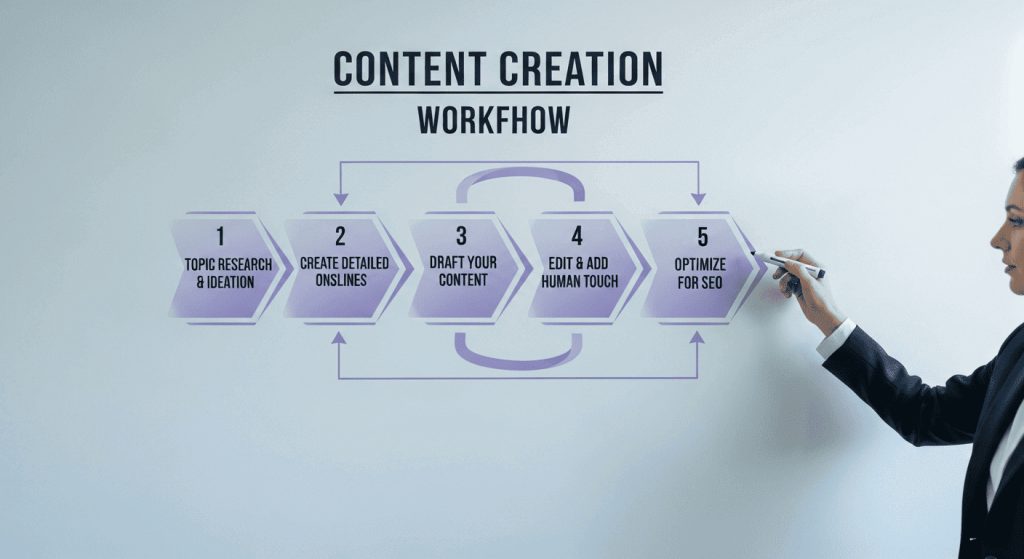
Understanding how to integrate AI tools into your blogging process maximizes their effectiveness while maintaining content authenticity.
Step 1: Topic Research and Ideation
Start by using AI to generate topic ideas based on your niche and target audience. Tools like ChatGPT can brainstorm dozens of relevant topics in seconds. Validate these ideas using keyword research tools to ensure search demand exists.
Step 2: Create Detailed Outlines
AI excels at generating comprehensive content structures. Provide your target keyword, desired word count, and key points you want to address. The AI will create a logical outline with headings and subheadings that you can refine based on your expertise.
Step 3: Draft Your Content
Use AI to generate initial drafts for each section. The key is treating AI as a writing partner rather than a replacement for your voice. Let the AI handle the heavy lifting while you guide the direction and add personal insights.
Step 4: Edit and Add Human Touch
Never publish AI-generated content without thorough review. Add personal experiences, industry insights, and unique perspectives that only you can provide. This step is crucial for meeting Google’s E-E-A-T guidelines.
Step 5: Optimize for SEO
Run your content through optimization tools to ensure proper keyword usage, readability, and structural elements. Check that your content addresses search intent and includes relevant internal and external links.
Google’s E-E-A-T Guidelines and AI Content
Google has clarified its stance on AI-generated content: quality matters more than how content is produced. The search engine rewards content demonstrating Experience, Expertise, Authoritativeness, and Trustworthiness (E-E-A-T), regardless of whether AI assisted in creating it.
However, Google advises against publishing fully AI-generated content without human review. The March 2024 core update specifically targeted low-quality AI content, with Google aiming to reduce such content in search results by 40%.
Best Practices for E-E-A-T Compliance:
- Always fact-check AI-generated information
- Add personal experience and expert insights
- Include author credentials and bylines
- Cite authoritative sources for claims
- Ensure content genuinely helps readers
ROI and Benefits of AI Blog Writing Tools
Investing in AI writing tools delivers measurable returns across several areas.
Time Savings: Content that traditionally took hours can be drafted in minutes. Many bloggers report completing posts in under 30 minutes using AI-assisted workflows.
Cost Reduction: A monthly AI subscription often costs less than a single freelance article yet enables production of dozens of posts. This significantly lowers cost-per-article while increasing output.
Consistency: AI helps maintain publishing schedules without overwhelming your team. Regular content production improves SEO performance through consistent indexing.
Quality Improvements: Grammar checking, style suggestions, and optimization features ensure every piece meets professional standards.
According to industry data, 71.7% of content marketers use AI for outlining, 68% for content ideation, and 57.4% for drafting—demonstrating the technology’s value across the content creation process.
Frequently Asked Questions
Is AI-generated blog content good for SEO?
Yes, when properly optimized and edited. AI-generated content can rank well in search engines as long as it provides genuine value, addresses user intent, and follows E-E-A-T principles. The key is treating AI as an assistant rather than publishing raw output without review.
Does Google penalize AI-written content?
Google does not penalize content simply because AI assisted in creating it. However, low-quality, unhelpful, or spammy content—whether human or AI-generated—will be penalized. Focus on creating valuable, accurate content that serves your readers.
Which AI writing tool is best for beginners?
ChatGPT and Rytr are excellent starting points for beginners. Both offer free plans, intuitive interfaces, and produce quality output without steep learning curves. As you become more comfortable, you can explore specialized tools like Jasper or Frase.
Can AI completely replace human writers?
No. AI works best as a collaborative tool that augments human creativity rather than replacing it. The most effective approach combines AI efficiency for research, outlines, and drafts with human expertise for editing, insights, and authenticity.
How much do AI writing tools cost?
Prices range from free (ChatGPT basic, Rytr free tier) to $69/month or more for premium tools with advanced SEO features. Most bloggers find excellent value in the $15-40/month range with tools like Jasper, Frase, or ChatGPT Plus.
What’s the best AI for long-form blog content?
Jasper and Claude excel at long-form content creation. Jasper offers templates specifically designed for blog posts, while Claude handles complex, research-heavy content with superior context retention.
Are there free AI tools for blog writing?
Yes. ChatGPT, Rytr, and Copy.ai all offer free plans with useful features. While limited compared to paid versions, these free tiers provide excellent starting points for testing AI-assisted blogging.
Conclusion and Key Takeaways

Finding the best AI for blog writing depends on your specific needs, budget, and content goals. For versatility and budget-friendly options, ChatGPT and Rytr deliver excellent value. Marketing teams requiring brand consistency and SEO integration will benefit most from Jasper or Frase. Writers producing complex, research-intensive content should consider Claude.