

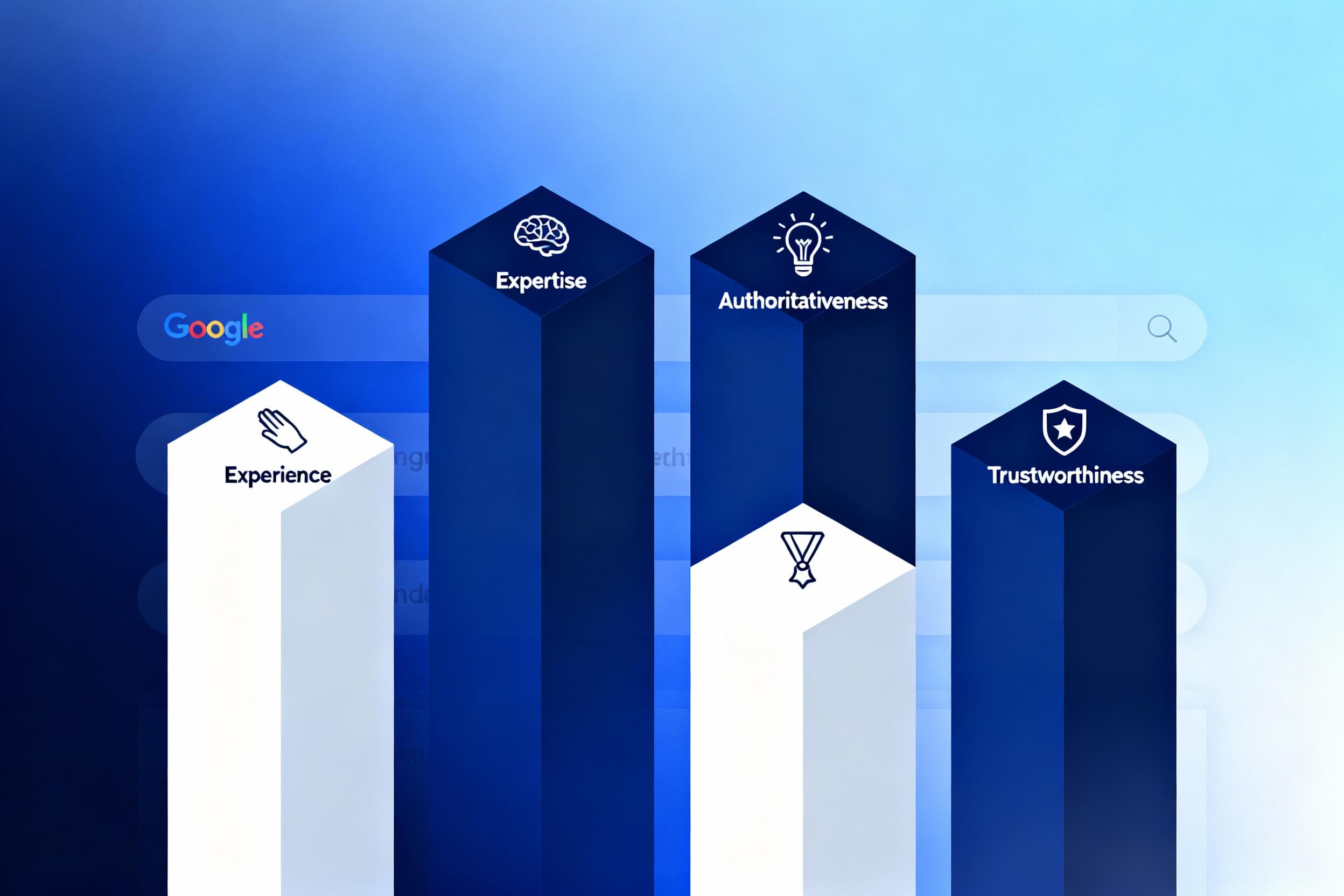
Google’s search algorithm has fundamentally changed how websites rank online. Today, success depends less on keyword density and more on what Google calls E-E-A-T—a framework representing Experience, Expertise, Authoritativeness, and Trustworthiness. In 2025, optimizing for E-E-A-T SEO is no longer optional; it’s essential for competitive rankings.
With AI-generated content flooding the internet, Google has doubled down on identifying content from genuine human experts who demonstrate real knowledge and credibility. According to a 2024 SEMrush study, pages with strong E-E-A-T signals achieve a 30% higher chance of ranking in the top 3 positions compared to those with weak signals.
This comprehensive guide walks you through each pillar of E-E-A-T SEO optimization, showing you exactly how to implement these principles across your website, improve your search visibility, and build lasting trust with both users and search engines.
What is E-E-A-T in SEO?
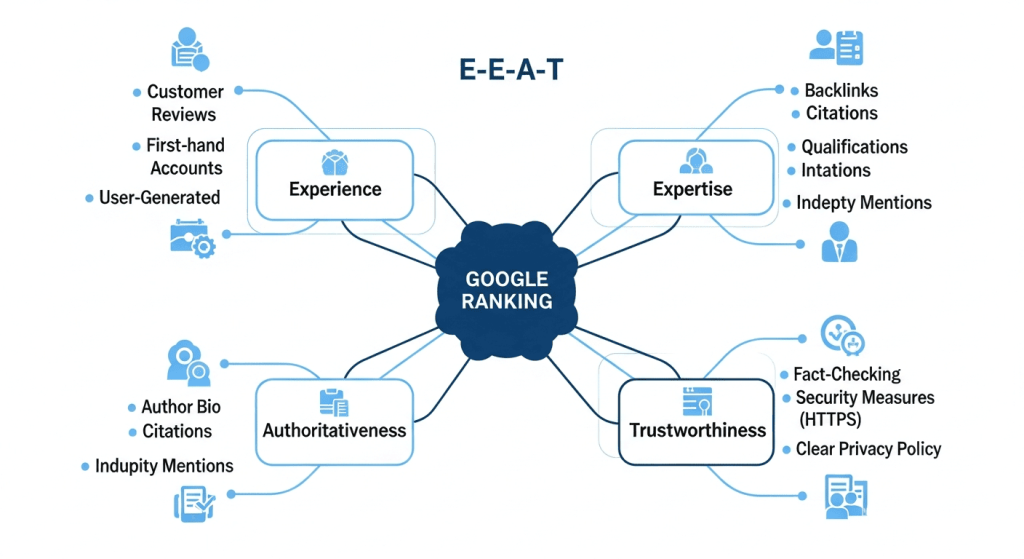
E-E-A-T stands for four interconnected pillars that Google uses to evaluate content quality:
- Experience: Does your content demonstrate genuine, hands-on knowledge from real-world practice? Google increasingly favors content created by people who have actually experienced what they’re writing about, rather than surface-level information compiled from other sources.
- Expertise: Is the content creator a recognized subject matter expert in their field? Expertise includes formal education, professional certifications, years of industry experience, and demonstrated knowledge that goes beyond general information.
- Authoritativeness: Does your website and author carry weight and recognition within their niche? Authority builds through industry citations, media mentions, quality backlinks from reputable sources, and your website’s overall reputation.
- Trustworthiness: Can users rely on your information to be accurate, transparent, and current? Trust is established through fact-checking, proper sourcing, clear disclosures, and regular content updates.
These four elements work together. A single strong element doesn’t guarantee rankings—Google evaluates your overall E-E-A-T profile across your content and website.
Why E-E-A-T Matters More Than Ever
The AI Content Challenge
The proliferation of AI-generated content has made E-E-A-T optimization critical. While AI tools are helpful for drafting and research, pure AI-generated content without human expertise signals lacks credibility. Google explicitly values content enriched with personal experience, expert insights, careful editing, and original data.
Your Money Your Life (YMYL) Content
If your content falls into YMYL categories—topics affecting health, finances, safety, or well-being—E-E-A-T becomes even more crucial. Google applies stricter scrutiny to YMYL content because misinformation can directly harm readers. Financial advice, medical information, legal guidance, and safety content must demonstrate exceptional expertise and trust signals.
Search Algorithm Evolution
In March 2024, Google incorporated the Helpful Content ranking system into its core algorithm. This wasn’t just an update; it fundamentally shifted how Google identifies quality content across all websites. The message is clear: Google prioritizes helpful, people-first content created by credible sources over keyword-optimized material written solely for search engines.
How to Demonstrate Experience in Your Content

Include Real-World Case Studies
One of the most powerful ways to showcase experience is through detailed case studies documenting actual results. Rather than making generic claims about your services, walk readers through specific client examples, the challenges faced, your solutions implemented, and measurable outcomes achieved. Include metrics, timelines, and specific details that prove your hands-on involvement.
Share Original Data and Research
Conducting original research or surveys positions you as an experienced practitioner willing to invest in insights others won’t. If you’ve tested strategies, surveyed customers, or analyzed industry trends, present these original findings alongside your interpretation. This demonstrates both experience and authority.
Document Your Process
Readers trust processes they can see. Whether it’s your methodology for solving client problems, your workflow for content creation, or your approach to implementing solutions, transparency about your process signals genuine experience. Use detailed explanations, screenshots, or videos to show how you actually work.
Highlight Your Customer Base
Numbers matter to Google. Quantifying your experience—how many customers you’ve served, the industries you’ve worked in, the scale of your operations—provides concrete evidence of extensive experience. If you’ve worked with recognizable brand names, mention those. If you serve a global client base, highlight that reach.
Building Expertise and Author Credibility
Create Detailed Author Bios
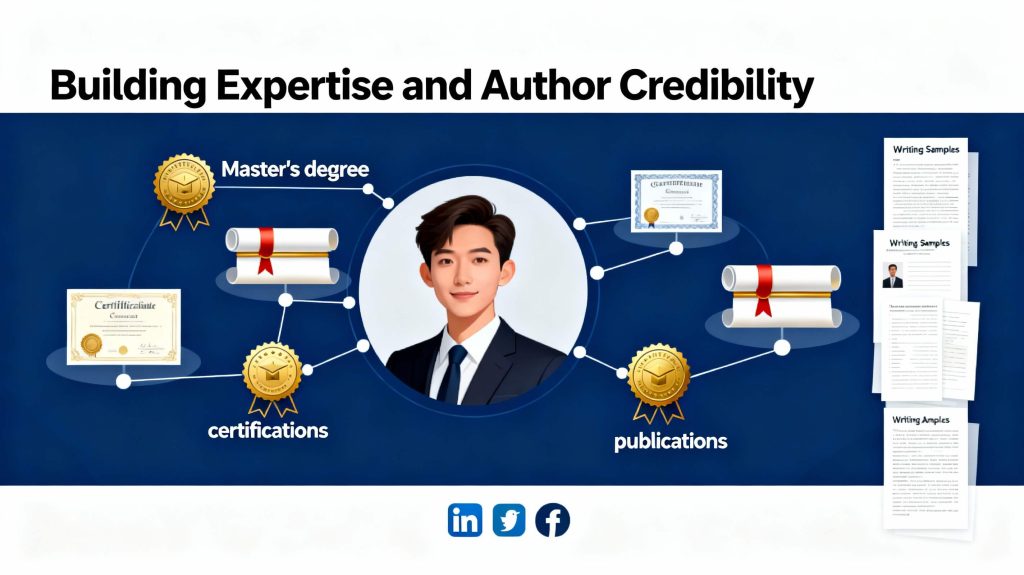
Your author bio is a critical E-E-A-T signal often overlooked by content creators. A robust bio should include your professional background, relevant degrees, industry certifications, speaking engagements, published works, and media appearances.
Avoid vague statements like “industry expert.” Instead, be specific: “Sarah holds a Master’s degree in Digital Marketing from Northwestern University, earned her Google Analytics certification, and has published content in Forbes, Entrepreneur, and HubSpot’s blog.” This specificity builds credibility.
Showcase Relevant Credentials
For YMYL topics especially, displaying professional licenses, certifications, and credentials is essential. Medical professionals should list their medical degree and board certifications. Financial advisors should show their securities licenses. This transparency is not just helpful—it’s often legally required for certain industries.
Implement Author Schema Markup
Using schema markup signals to Google exactly who created your content. The Author schema specifically tells search engines about the person behind the article, their credentials, and their publications. This structured data helps Google better understand and evaluate your expertise.
Most modern WordPress plugins like Yoast SEO or Rank Math allow you to add author schema without coding. If you build custom websites, you can generate schema markup using tools like schema.org’s markup generator.
Link to Professional Profiles
Connect your author bios to your LinkedIn profile, professional websites, or industry directories. These external signals reinforce your credentials to Google and give readers an additional way to verify your expertise.
Building Authoritativeness and Domain Authority
Earn High-Quality Backlinks
Authority in search comes largely from what others say about you. High-quality backlinks from reputable, relevant websites signal that your content is trustworthy and valuable.
Rather than pursuing quantity, focus on relevance and quality. A single backlink from a recognized industry publication or authoritative source carries far more weight than dozens of links from low-authority websites. Target websites with Domain Authority (DA) scores of 70 or higher when possible.
Create Content Worth Linking To
The most sustainable way to earn backlinks is creating original, comprehensive research and insights that others naturally want to reference. A well-researched article of 1,500–3,000 words combining statistics, studies, and expert opinions attracts more backlinks than shorter, general content.
Secure Media Coverage and Brand Mentions
When journalists, podcasters, or industry influencers mention your brand and link to your site, that third-party endorsement carries significant authority weight. Pursue media coverage through press releases, expert commentary offers, and newsworthy research findings.
Contribute to Industry Publications
Writing guest articles on established industry publications not only earns backlinks but positions you as an authority worth publishing. These publications already have established authority, so association with them elevates your own credibility.
Build Topical Authority
Create interconnected content clusters around related topics within your niche. Websites demonstrating deep expertise across a topic area through multiple, well-linked articles show stronger topical authority than scattered, unrelated content.
Establishing Trustworthiness
Fact-Check Everything and Cite Sources
Every statistic, study, historical fact, or expert claim in your content should come with credible sources. Linking to primary sources—the original research paper, government website, or official announcement—builds reader and search engine trust.
When fact-checking AI-generated content, verify key claims, statistics, and technical information. Use reliable sources like government websites, academic journals (Google Scholar, JSTOR), major news organizations, and industry leaders. Never cite the AI tool; always cite the original source.
Update Content Regularly
Fresh content signals to Google that your site is active and your information current. Regular updates, especially for older articles, send positive signals to both algorithms and users.
Review your content quarterly or at least annually. Add new statistics if old ones have become dated. Update case studies with current examples. Revise outdated advice. These updates improve rankings and enhance user trust in your information’s relevance.
Display Trust Signals Prominently
Customer reviews and testimonials function as powerful trust signals. Research shows that 86% of consumers report that five-star ratings and positive reviews are the most likely trust signals to drive purchases. Display your best reviews and testimonials on key pages.
Include security badges, privacy certifications, industry affiliations, and awards on your site. These visual trust indicators help both users and Google assess your legitimacy.
Be Transparent About Affiliations and Conflicts
If you promote products or services you have financial stakes in, disclose those relationships clearly. Transparency about potential conflicts of interest builds trust rather than diminishing it. Readers respect honesty; hiding relationships damages credibility.
The Role of AI in E-E-A-T SEO
AI as a Helper, Not a Replacement
AI tools excel at drafting, research, outlining, and overcoming writer’s block. However, pure AI-generated content without human enhancement will struggle to rank well. The winning approach combines AI efficiency with human expertise.
Use AI to create initial drafts and research frameworks. Then enhance with your personal insights, real examples from your experience, original data, careful fact-checking, and your unique voice. This hybrid approach satisfies both Google’s algorithms and user expectations.
Document Your Expert Review Process
If you use AI in content creation, make your human review process visible. Mention that certified professionals reviewed medical content, that a CFP verified financial advice, or that industry experts provided final approval. This transparency signals that expertise guided the final product.
Implementing Schema Markup for E-E-A-T
Article Schema
Article schema markup helps Google understand your content’s authorship, publication date, and featured images. Include:
- Author name and bio
- Publication date
- Updated date (if applicable)
- Article headline
- Featured image
FAQ Schema
If your article answers common questions, FAQ schema displays these Q&A pairs in search results as an expandable accordion. This rich snippet format not only improves visibility but signals that you’re answering what users actually want to know.
Author Schema
Specifically mark up author information, including name, credentials, social profiles, and photo. This helps Google connect you across multiple articles and build a stronger author entity.
FAQ Section
1. How does E-E-A-T affect my search rankings?
Google’s algorithms use E-E-A-T signals to evaluate content quality. Strong E-E-A-T indicators correlate with higher rankings, especially for competitive keywords. A 2024 study found that pages with strong E-E-A-T signals rank in the top 3 positions 30% more often than weak E-E-A-T pages.
2. Is E-E-A-T more important for YMYL content?
Yes. YMYL content—articles affecting health, finances, or safety—faces stricter E-E-A-T requirements. Google scrutinizes these topics more carefully because misinformation can directly harm readers. If your content affects financial stability or health decisions, demonstrating exceptional expertise is non-negotiable.
3. How long does it take to build authority through E-E-A-T?
Building authority is a long-term process. Earning quality backlinks, accumulating media mentions, and establishing expertise typically takes months or years. However, improvements in other E-E-A-T signals—like better author bios, fact-checking, and original research—can show results more quickly.
4. Can I use AI to create E-E-A-T optimized content?
AI can help, but pure AI content struggles with E-E-A-T signals. Use AI for drafting and research, then enhance with personal expertise, real examples, original research, and human editing. This hybrid approach satisfies both algorithms and users.
5. What’s the difference between authority and experience in E-E-A-T?
Experience refers to hands-on knowledge from personal practice or direct involvement. Authority refers to broader recognition and respect within your industry, built through publications, backlinks, media mentions, and citations. Both matter separately and together.
6. How do I demonstrate experience if I’m new to my field?
Even newer professionals can build experience signals by documenting your learning journey, sharing case studies from your work, contributing to team projects, and mentioning specialized training or certifications. Focus on depth in your specific area rather than claiming years of experience.
7. Does E-E-A-T apply to all content types?
While E-E-A-T matters across all content, it’s most critical for YMYL topics. However, competitive niches in any field benefit from strong E-E-A-T signals. E-commerce, software, and informational content all rank better with demonstrable expertise and trust signals.
Conclusion: E-E-A-T as Your SEO Foundation
E-E-A-T SEO optimization is no longer a nice-to-have addition to your content strategy—it’s the foundation of sustainable search visibility. In 2025, Google’s algorithms increasingly reward websites that demonstrate genuine expertise, build real authority, and establish transparent trust with their audiences.
The SEO landscape rewards authenticity. Rather than chasing algorithm tricks or keyword shortcuts, focus on becoming a recognized expert in your field. Document your experience, display your credentials, earn quality citations, fact-check your information, and update your content regularly.
Remember that E-E-A-T works as an integrated system. While you might excel in demonstrating expertise, weaker authoritativeness or trust signals will hold back your rankings. Audit all four pillars and strengthen the weakest areas first.
Your Next Steps
- Audit your current E-E-A-T profile – Evaluate where your website stands on each pillar
- Enhance author bios – Immediately strengthen author credibility signals
- Implement schema markup – Add Article and Author schema to your content
- Build authority strategically – Target high-quality backlinks from relevant publications
- Establish a content freshness schedule – Update older articles with new information quarterly
By systematically implementing these E-E-A-T optimization strategies, you’ll build a website that Google trusts, users value, and algorithms reward—creating lasting rankings and sustainable organic growth for years to come.